Investment casting, based on the lost-wax technique, lets you create metal parts with high precision and minimal waste. You can rely on this method to produce complex shapes that often require little or no machining. Compared to sand casting, you get thinner walls and more reliable results. This process also holds tighter tolerances, which means you see fewer defects and lower scrap rates.
Key Takeaways
Investment casting allows for high precision and complex shapes, reducing the need for additional machining.
The process produces parts with excellent surface finishes, often matching the quality of milled surfaces.
Investment casting is ideal for small to medium production runs, making it suitable for custom and specialty parts.
Choosing the right material is crucial; consider factors like strength, corrosion resistance, and cost for optimal performance.
While investment casting offers many advantages, it may not be suitable for very large parts or high-volume production.
What Is Investment Casting?
Definition & Key Features
You may hear people call investment casting by other names, such as lost wax casting or precision casting. Industry experts define investment casting as a method where you create parts by pouring molten metal into ceramic shell molds. The process starts when you inject wax into a mold to make a positive image of your part. You then coat this wax pattern with several layers of ceramic slurry. After the ceramic hardens, you remove the wax and pour in the metal to form your final part.
Note: Investment casting stands out because it gives you the ability to make parts with very tight tolerances and smooth surfaces.
Here is a table that shows how investment casting compares to other casting methods:
Feature | Investment Casting | Shell Mold Casting | Sand Casting | Die Casting |
Tolerance | Tighter | Looser | Low | Medium |
Surface Finish | Smoother | Rougher | Rough | Moderate |
Complexity of Design | High | Low | Low | Medium |
Precision | High (0.005 in) | - | Low | Medium |
You can use investment casting when you need high precision, a smooth finish, and the ability to create complex shapes. This process often means you do not need extra machining after casting.
Precision & Complexity
You get several benefits when you choose investment casting. The process lets you make parts with very fine details, including undercuts and thin walls. You can achieve wall thicknesses as low as 0.5 mm. This means you can design parts with intricate shapes that other casting methods cannot match.
You can expect a surface finish between 60 and 200 microinches (μin), with a common finish of 125 μin (3.2 μm Ra). This is as smooth as a good milled surface.
Sand casting usually gives you a rougher finish, around 250 μin (6.4 μm Ra).
You can achieve net or near-net shapes, which reduces the need for extra work after casting.
You can rely on the process to keep close dimensional tolerances. The foundry can control many factors to keep your parts accurate.
Investment casting gives you the flexibility to create parts with complex internal cavities and fine features. You can use this process for parts that need both high accuracy and a great surface finish.
Investment Casting Process
Wax Pattern Creation
You start by making a wax pattern that matches the shape of your final part. This pattern acts as a model for the mold. You inject melted wax into a metal die, then let it cool and harden. The wax pattern must be very accurate because it controls the size and detail of your finished part.
Here is a table showing common materials used for wax pattern creation and their characteristics:
Material | Characteristics |
Carbon Steel | Balances hardness, strength, and machinability. |
Aluminum | Lightweight, good for medium- to high-volume projects, resists corrosion. |
Stainless Steel Alloys | Forms a hard oxide layer, smooth surface possible with coatings. |
Brass and Bronze | Low melting points, excellent castability. |
Nickel-Based Superalloys | Used for high-performance parts in harsh environments. |
Titanium Alloys | Important for high precision, difficult to machine directly. |
Glass | Uses glass powder melted in a kiln for even filling. |
You can see that the choice of material depends on the needs of your part.

Ceramic Mold Formation
After you create the wax pattern, you need to build a ceramic shell around it. This shell will become the mold for your metal part. You dip the wax pattern into a ceramic slurry made from materials like silica, zircon, or alumina mixed with a binder. You let the slurry dry, then repeat the process several times to build up layers.
Here are the main steps for ceramic mold formation:
Make a pattern from rubber, wood, plastic, or metal.
Coat the pattern with ceramic slurry.
Let the slurry dry to form a shell.
Heat the mold to remove moisture.
Fire the mold in a furnace at about 1000°C to harden it.
The quality of the ceramic shell affects your final casting. A strong, dense shell captures fine details and prevents defects. The thickness and surface quality of the shell help ensure your part matches the design and has a smooth finish.
Aspect | Impact on Casting Quality |
Dimensional Accuracy | Ensures the final product matches the intended design. |
Surface Finish | Affects the look and function of the casting. |
Defect Prevention | Reduces flaws in the final casting. |
Thickness of Layers | Must meet exact specs for strength and detail. |
Density of Shell | Helps the mold withstand high temperatures. |
Surface Quality | Captures fine details from the wax pattern. |
Wax Removal
Once the ceramic shell is ready, you need to remove the wax pattern inside. You heat the mold in a kiln or autoclave. The wax melts and drains out, leaving a hollow ceramic shell. This step is important because any leftover wax can cause defects in your part. You must make sure the shell stays strong and does not crack during heating.
Metal Pouring
Now you are ready to pour molten metal into the ceramic shell. You heat the metal to the right temperature for the material you chose. For example, molten metal can reach around 800°C or higher. You must pour the metal carefully to avoid splashing and oxidation.
Here is a table showing how the choice of metal affects the process:
Material | Shrinkage Rate | Tolerance Impact |
Stainless 316 | 2.1% | High |
Aluminum A356 | 1.8% | Medium |
Cobalt Alloy | 2.3% | Very High |
Safety Note: Always wear protective clothing and work in a well-ventilated area. Only trained people should handle molten metal.
You must control the pouring rate and temperature. You also need to record the start and end times, and keep track of each batch. This helps you make sure every part meets your quality standards.
Finishing & Inspection
After the metal cools and solidifies, you break away the ceramic shell. You now have a rough metal part that matches your original design. You need to finish the part to improve its surface and meet final specifications.
Here is a table of common finishing techniques:
Technique | Applications | Benefits |
Sandblasting | Decorative items, matte finish | Cost-effective, prepares for further finishing |
Shot peening | Aerospace, automotive | Increases strength, fatigue resistance |
Grinding & polishing | Precision, medical, decorative | High tolerances, smooth, attractive finish |
Chemical finishing | Automotive, aerospace, marine | Improves corrosion resistance, looks better |
Electroplating | Decorative, electronics | Durable, many finish options |
Coating | Consumer, automotive, industrial | Protects against environment, adds appeal |
You also need to inspect each part to make sure it meets your requirements. You can use non-destructive testing methods like radiographic testing, ultrasonic testing, magnetic particle inspection, and dye penetrant inspection. Advanced tools like computed tomography scanning and laser scanning help you check for internal and surface defects without damaging the part.
Remember: Careful inspection ensures that every investment casting part is safe, reliable, and ready for use.
Materials for Investment Casting
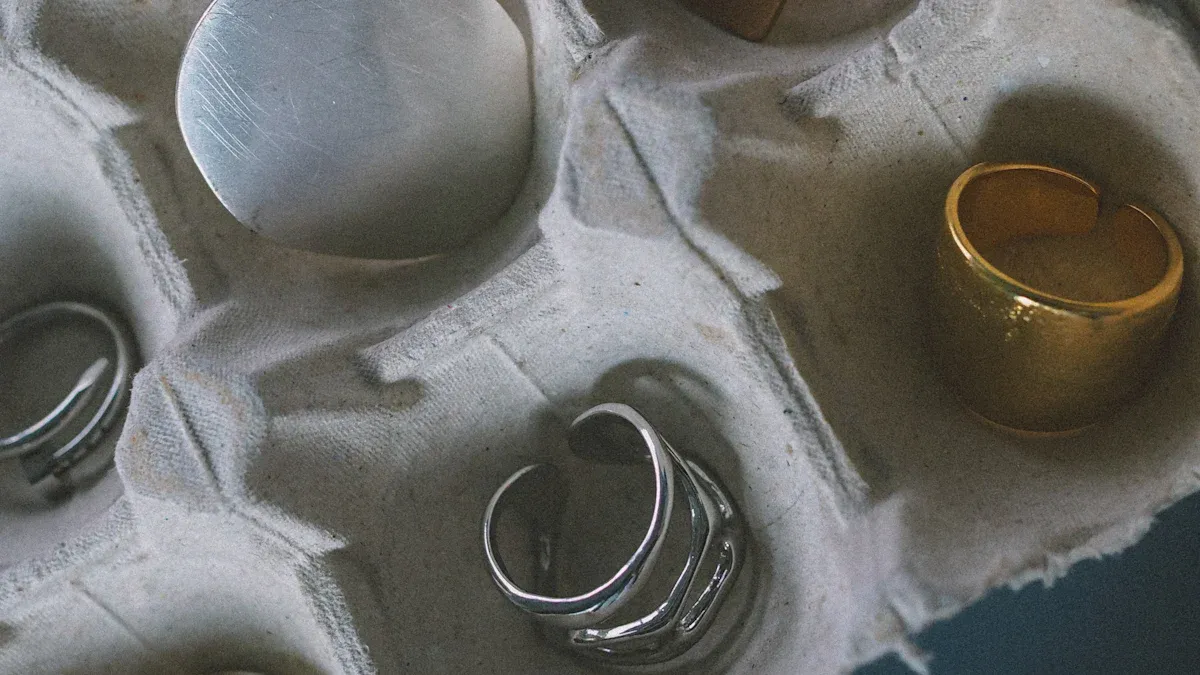
Common Metals & Alloys
You have many choices when selecting metals and alloys for investment casting. Each material offers unique benefits for different industries. Here are some of the most common options you might use:
You can find these metals in industries such as aerospace, power generation, automotive, military, commercial, food service, gas and oil, and energy. You may also see ferrous alloys, non-ferrous alloys, high-strength stainless steel, aluminum alloys, and armor alloys used for special applications.
Stainless steel resists rust and corrosion, making it a popular choice for parts that need to last. Aluminum alloys give you lightweight parts with good strength. Nickel-based superalloys and titanium stand out for their ability to handle high heat and harsh environments.
Material Selection Factors
When you choose a material for investment casting, you need to think about several important factors. The properties of each metal or alloy affect how well your part will perform.
Factor | Description |
Mechanical Properties | Strength, ductility, and hardness help your part work as needed. |
Environmental Conditions | Corrosion resistance and temperature tolerance matter for tough environments. |
Cost Considerations | You must balance performance with your budget, including material and machining costs. |
Weight Requirements | Lighter parts help in industries like automotive and aerospace. |
Surface Finish & Aesthetic | Some applications need a smooth finish or a certain look. |
Regulatory Standards | You must meet rules for safety and quality, especially in medical and aerospace fields. |
Mechanical properties, such as strength and toughness, help your part stand up to stress.
Corrosion resistance keeps your part working longer, especially if you use stainless steel or copper-based alloys.
Cost matters because special alloys can raise your project budget.
Tip: Always match the material to your part’s needs. Think about where you will use the part and what it must do.
Investment Casting gives you the flexibility to choose the best material for your application. You can create strong, precise, and cost-effective parts by considering these factors.
Investment Casting Pros & Cons
Advantages
You gain many benefits when you choose investment casting for your parts. This process stands out for its precision and ability to create detailed shapes. Here are some key advantages:
You get exceptionally accurate and precise parts, even for small or intricate designs.
The process works with both ferrous and non-ferrous metals, giving you flexibility in material choice.
You see excellent surface finishes and fine component details, which means less need for extra polishing or machining.
You can make parts with complex shapes, thin walls, and features that other casting methods cannot match.
The process produces near-net-shape components, so you use less material and create less waste.
You can recycle excess metals and mold materials, which helps the environment.
You avoid parting lines, so your parts look smooth and professional.
Investment casting works well for low-to-medium production volumes, making it a smart choice for custom or specialty parts.
Tip: By casting parts close to their final shape, you save time and reduce the amount of material you need to machine away.
Limitations
You should also consider the limitations before choosing investment casting. Some factors may affect whether this process fits your needs:
The process is less suitable for very large parts. You get the best results with parts weighing between 0.01 and 20 kilograms.
If your part weighs more than 75 pounds, other casting methods may work better.
You may face higher initial tooling and production costs, especially for small production runs.
The process takes longer to produce each part compared to die casting, which is faster for high-volume jobs.
Factor | Investment Casting | Die Casting |
Best for Volume | Low to medium | High to very high |
Tooling Investment | Low to moderate | Very high |
Lead Time | Shorter for tooling | Longer for tooling |
Part Production Speed | Slower | Very fast |
Note: If you need a large number of parts quickly, or if your parts are very large, you may want to explore other casting methods.
By weighing these pros and cons, you can decide if investment casting matches your project’s needs.
Applications
Industry Uses
You will find investment casting in many industries that need high precision and complex shapes. This process helps you make parts that must meet strict standards for size and finish. Here is a table showing where you see investment casting most often and what parts you can make:
Industry | Main Applications |
Aerospace and Defense | Turbine blades, combustion components |
Automotive and Electric Vehicles | Turbocharger housings, precision valves |
Medical and Biotechnology | Implants, surgical tools |
Energy and Oil & Gas | Valve bodies, connectors |
Industrial Equipment and Marine | Precision gears, high-end instruments |
You choose investment casting for these industries because you need:
Complex, thin-walled, or high-performance alloy parts
Superior surface finish
Tight dimensional tolerance
A wide range of materials
You can rely on investment casting when you want high precision, durability, and the ability to create intricate designs. You also waste less material, which helps your project and the environment.
Typical Products
You see many products made with investment casting. The process works with different metals and alloys, so you can make a wide variety of parts. Here is a table that shows common products and the materials used:
Material Type | Common Products Manufactured |
Stainless Steels | Medical devices, automotive parts, electronics |
Carbon and Low Alloy Steels | Structural components, industrial tools, brackets |
Nickel-based Superalloys | Aerospace parts, gas turbines, high-pressure systems |
Copper Alloys | Plumbing components, decorative hardware, marine parts |
Cast Aluminum | E-mobility structures, consumer products |
Cast Titanium | Aerospace and medical applications |
You can make turbine blades, orthopedic implants, and even decorative hardware. Investment casting lets you create parts with complex shapes, thin walls, and fine details. You get excellent surface finish and tight tolerances, so you often do not need extra machining. This makes investment casting a top choice for parts that must be both strong and precise.
You have learned that investment casting lets you create complex, precise metal parts with minimal waste. The process gives you excellent surface finishes and design freedom, but it also comes with size limits and higher costs.
Advantages | Limitations |
High accuracy | Size restrictions |
Superior surface finish | Higher initial costs |
Complex shapes possible | Longer production cycles |
Wide material selection | Needs skilled technicians |
Think about your project’s needs. If you want detailed, high-quality parts for industries like aerospace or medical, investment casting could be the right choice.
FAQ
What metals can you use in investment casting?
You can use many metals, such as stainless steel, aluminum, brass, bronze, and nickel-based alloys. Each metal offers different strengths and properties.
Is investment casting good for small batches?
You can use investment casting for small or medium batches. The process works well for custom parts and prototypes.
Low to medium volume
Custom designs
Specialty applications
What industries use investment casting?
You see investment casting in aerospace, automotive, medical, energy, and marine industries.
Note: You choose this process when you need complex shapes and high precision.


