Lost-Wax Casting, also called investment casting, gives you a way to create metal objects with amazing detail. You start with a wax model, cover it with a ceramic shell, and then melt the wax away. This technique began thousands of years ago in ancient civilizations such as Mesopotamia and China. You can use it for gold, silver, brass, bronze, and steel. Lost-Wax Casting lets you make complex shapes and smooth surfaces with high precision.
Key Takeaways
Lost-wax casting allows for the creation of detailed metal objects, making it ideal for jewelry, art, and industrial applications.
The process involves creating a wax model, covering it with a ceramic shell, and melting the wax away to form a precise mold.
This technique has been used for thousands of years, evolving from ancient civilizations to modern technology, including 3D printing.
Lost-wax casting is versatile, suitable for various metals like gold, silver, and steel, and is widely used in medical and dental fields for custom implants.
Safety is crucial; always wear protective gear and work in a well-ventilated area to avoid hazards during the casting process.
Lost-Wax Casting Applications
Jewelry and Art
You can use lost-wax casting to create both simple and complex jewelry and art pieces. This method lets you make rings, pendants, and bracelets with fine details. Artists have used it for centuries to produce sculptures and religious objects. The table below shows some famous uses:
Application | Notable Examples |
Jewelry | Antique jewelry, rings, brooches, pendants, bracelets |
Renaissance Sculpture | Benvenuto Cellini's Perseus with the Head of Medusa |
Mourning Jewelry | Intricate lockets and rings with floral patterns |
Religious Art | Reliquary of St. Ursula, religious medals |
Liturgical Objects | Chalices, censers, reliquaries |
You can see how lost-wax casting allows for intricate designs and high precision in metalwork. Artists from the Chola Dynasty captured movement and emotion in bronze statues. In Europe, this technique shaped Greek and Roman portraiture and inspired Renaissance masters like Leonardo da Vinci and Michelangelo. Today, modern technology like 3D printing helps you achieve even more detail in your jewelry and art.
Industrial Uses
Lost-wax casting plays a big role in many industries. You can use it to make engine parts, valves, and tools with tight tolerances. The process supports both mass production and custom runs. Here is a table of common industrial sectors and their typical components:
Industrial Sector | Typical Components Produced |
Automotive | Engine components, compressor parts, gearbox elements, fuel pump housing, injector clamp, turbo wastegate |
Oil and Gas | Gate valves, tube handling devices, valve brackets, slip linkages, locking levers |
Chemical Industry | Bullhead tees, catalyst tubes, elbows, ethylene coils, heater hardware |
Food Industry | Meat slicers, poultry processing tools, ice machine parts, racks and grills |
Power | Components resistant to wear, made from cobalt, nickel, and Stainless Steel Investment Casting |
Tools | High tensile strength tools, intricate designs with precise dimensional accuracy |
Pharmaceutical | Components that endure sterilization, high-grade Stainless Steel Investment Casting parts |
Hoisting | Hoisting components with intricate designs, made from steel alloys |
You benefit from the ability to create highly engineered products with complex shapes. The process captures every detail of your design and reduces the need for extra machining. High Precision Lost Wax Casting and Carbon Steel Lost Wax Casting are popular choices for parts that need strength and accuracy.
Medical and Dental Fields
Lost-wax casting helps you make medical implants, surgical tools, and dental prosthetics. You can produce custom-fit orthopedic implants and maxillofacial plates. In dentistry, this method remains the most widely used for crowns and frameworks. Here are some key uses and advantages:
Orthopedic implant components
Maxillofacial reconstruction plates
Surgical instrument parts
Custom prosthetics
Dental crowns, bridges, and partial denture frameworks
Tip: Lost-wax casting offers high accuracy and uses biocompatible materials, making it safe for medical and dental applications.
You get consistent results and tight tolerances, which are important for patient comfort and safety. Even as digital methods grow, lost-wax casting remains the top choice for many dental and medical devices.
Lost-Wax Casting Process
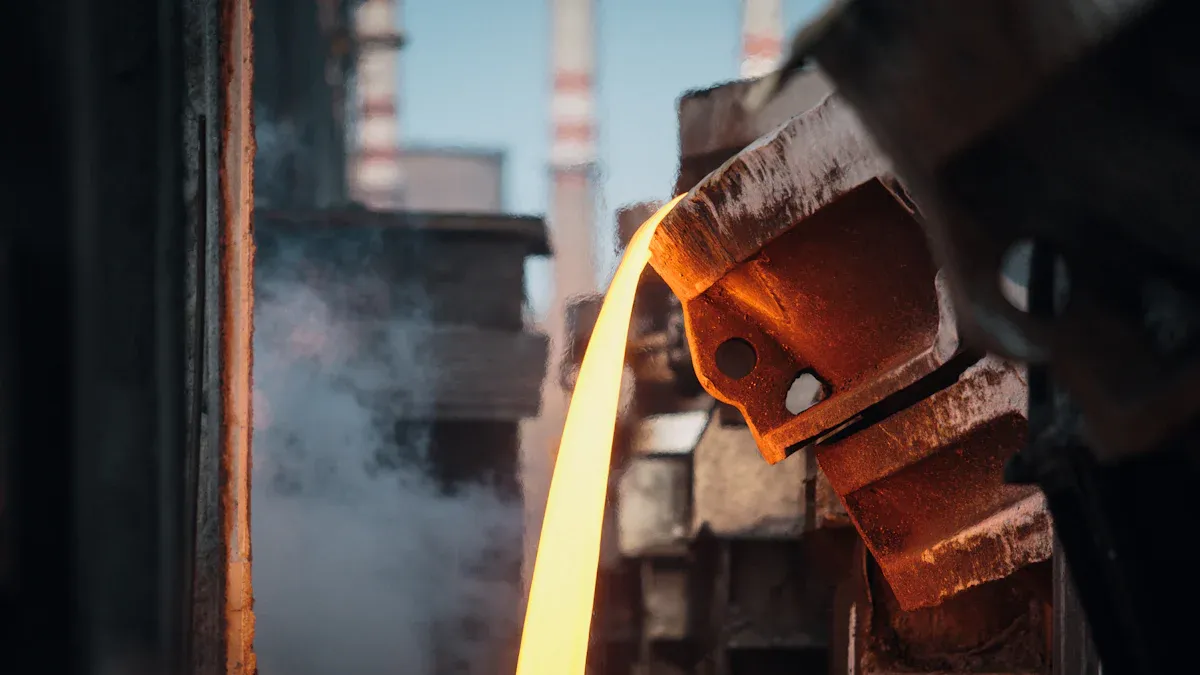
You can follow a series of clear steps to complete the lost-wax casting process. Each step helps you create a metal object with high detail and accuracy.
Wax Model Creation
You start by making a wax model that matches the shape of your final object. You can carve this model by hand using special jeweler’s wax, or you can use digital tools and 3D printing for complex designs. Artists and engineers often attach a network of wax rods, called sprues and gates, to the model. These rods help the wax escape and guide the molten metal later.
Here is a table showing common types of wax and their uses:
Type of Wax | Characteristics and Applications |
Filled Pattern Wax | Strong and stable, best for complex and precise parts. |
Non-Filled Pattern Wax | Soft and easy to shape, good for jewelry and art. |
Runner Wax | Used for making the channels that direct metal flow. |
Water-Soluble Wax | Helps create detailed internal spaces and undercuts. |
Tip: The quality of your wax model decides the detail and finish of your final cast. Smooth and polish the wax for the best results.
Mold Investment
Next, you cover the wax model with a special material called investment. This step forms a hard shell around your wax model. You dip the wax in a ceramic slurry and add layers until the shell is thick enough. The investment must match the metal you plan to use.
Investment Material | Best For |
Plaster-Based Investment | Gold, silver, and low-temperature alloys |
Silica-Based Investment | Industrial and dental casting |
Ceramic Investment | High-temperature metals like bronze, titanium |
You must control the coating process carefully. Each layer needs to dry before you add the next. This careful work helps the mold capture every detail from the wax model.
Wax Removal
After the investment hardens, you remove the wax. This step is called "lost wax" because the wax melts away, leaving a hollow space. You can use a steam autoclave, an oven, or even special solvents. The method you choose depends on the size and type of your mold.
Method | Advantages | Disadvantages |
Steam Autoclave | Fast and efficient | Can damage the shell if overheated |
Oven Meltout | Good for large molds | Slower process |
Solvent Extraction | Works with special waxes | Needs extra safety steps |
The wax removal step is very important. It creates a clean, detailed cavity for the metal. If you control this step well, your final cast will have a smooth surface and sharp details.
Metal Pouring
Now you pour molten metal into the empty mold. You must heat the metal to the right temperature so it flows easily and fills every part of the mold. The table below shows common metals and their pouring temperatures:
Metal | Melting Pouring Temperature (°C) | Flask Casting Temperature (°C) |
Aluminium | 750 - 800 | 200 - 500 |
Silver | 950 - 1050 | 450 - 600 |
Brass | 950 - 1050 | 580 - 650 |
9ct Gold | 940 - 1040 | 500 - 600 |
14ct Gold | 900 - 1000 | 500 - 600 |
Platinum | 1800 - 1900 | 870 - 970 |
You should keep the mold hot during pouring. This helps the metal fill every detail and prevents cracks or bubbles.
Finishing Steps
Once the metal cools, you break away the investment shell. You remove the sprues and gates, then clean the casting. You may need to sand, grind, or polish the surface. Some pieces need heat treatment to make them stronger or more resistant to rust. For high-precision parts, you might use extra machining.
Here is a table of common finishing steps:
Step | Description |
Cleaning | Removes leftover ceramic with steel blasting |
Machining | Grinds away rough edges and burrs |
Heat Treating | Improves strength and durability |
Inspection | Checks for quality and accuracy |
Note: The way you finish your cast object affects how it looks and how long it lasts. Careful finishing brings out the best in your lost-wax casting.
You can see that lost-wax casting uses a sacrificial wax model to create a detailed and accurate metal object. Each step, from wax model to final polish, helps you achieve high-quality results.
Tools and Materials
Wax and Modeling Tools
You need the right wax and tools to shape your model. Each type of wax has special features. You can see the main types in the table below:
Type of Wax | Description | Advantages | Disadvantages |
Filled Pattern Wax | Contains additives for better control. | High strength, less shrinkage. | More expensive, harder to process. |
Non-Filled Pattern Wax | Simple, easy to shape. | Good flow, easy to recycle. | Lower strength, can shrink. |
Runner Wax | Used for channels that guide metal. | Helps metal flow, reduces defects. | Low melting point. |
Sticky Wax | Tacky, good for joining parts. | Great for repairs and assembly. | Can leave residue, brittle in cold. |
Water-Soluble Wax | Dissolves in water, eco-friendly. | Clean molds, good for the environment. | Not for all patterns. |
You use modeling tools like spatulas, carving knives, and heated pens to shape and smooth the wax. These tools help you add fine details to your design.
Investment Materials
You cover your wax model with an investment material to make a strong mold. In the past, people used beeswax and clay. Today, you use modern compounds for better results. Plaster-based investments work well for jewelry. Ceramic and silica-based investments handle high temperatures for metals like bronze and steel. Investment casting uses a wax pattern surrounded by a strong shell, which gives you a detailed and accurate mold.
Metals for Casting
You can use many metals in Lost-Wax Casting. Each metal has its own use. Here are some common choices:
Carbon Steel Lost Wax Casting: Good for strong, durable parts.
Alloy steel: Used for parts that need extra toughness.
Aluminum: Light and easy to shape.
Copper alloys: Great for art and jewelry.
Stainless Steel Lost Wax Casting: Best for parts that resist rust and wear.
You can also use gold, silver, brass, and bronze for jewelry and art. The metal you choose depends on your project’s needs.
Safety Equipment
You must protect yourself during casting. The process uses heat, chemicals, and heavy tools. The table below shows common hazards and how to stay safe:
Hazard Type | Description | Safety Equipment/Precautions |
Chemical | Fumes from metals and fluxes | Good ventilation, burn kit |
Physical | Burns, cuts, and machine injuries | Heat gloves, leather apron, steel-toed boots |
Ergonomic | Strain from poor posture | Set up your workspace for comfort |
Fire | Flames from kilns and torches | Fireproof area, fire plan, safe gas handling |
Exposure | Breathing fumes, touching hot surfaces | Eye protection, proper ventilation |
Tip: Always wear safety gear and work in a well-ventilated area. This keeps you safe from heat, fumes, and accidents.
You need the right tools and materials to get the best results from Lost-Wax Casting. Careful choices help you create detailed and strong metal objects.
Practical Tips and Comparisons
Home Casting Advice
If you want to try lost-wax casting at home, you can follow these tips to get better results:
Use a Dremel tool for carving wax. If you want higher quality, you can try a Proxxon or Foredom tool.
Start with simple shapes. A thickness of 1 to 1.5 millimeters works well for most beginner projects.
Try making a plain oval top signet ring. This project helps you practice symmetry and balance.
Do not worry about mistakes. Wax is cheap, so you can practice and improve your skills with each attempt.
Tip: Practice often. Each new project helps you learn more about the process.
Common Issues
You may face some challenges when working with lost-wax casting. Here is a table that shows common problems, their causes, and how you can solve them:
Issue | Causes | Solutions |
Porosity | Poor ventilation, leftover wax, contamination | Improve airflow, remove wax fully, keep area clean |
Surface defects | Bad mold prep, wrong metal temperature, contamination | Prepare mold well, control temperature, keep area clean |
Incomplete filling | Not enough metal, bad mold design, poor flow | Use more metal, improve design, help metal flow |
Wax pattern damage | Rough handling, bad storage, too much heat | Handle gently, store well, avoid heat |
Investment failure | Weak material, bad mixing, not enough time | Use good material, mix well, let set fully |
Metal contamination | Low-quality metal, bad melting, contamination | Use good metal, melt right, keep area clean |
Casting shrinkage | Not enough metal, bad design, cools too fast | Use more metal, fix design, control cooling |
Lost-Wax vs. Other Methods
You might wonder how lost-wax casting compares to other casting methods. Here are some key points:
Lost-wax casting gives you high accuracy and smooth surfaces. You can make parts with tight tolerances and complex shapes.
Sand casting costs less for tools but may need more labor. It works well for large runs and bigger parts.
Investment casting costs more at the start because of the process and tools. It works best for small batches or prototypes.
Die casting is good for high-volume production but does not match the detail of lost-wax casting.
Lost-wax casting stands out when you need detailed, small, or complex metal parts. You get smooth finishes and precise shapes, which are important for jewelry, art, and high-tech industries.
Lost-Wax Casting gives you a powerful way to create both art and industrial parts. You see this method in jewelry, sculptures, and high-tech industries like aerospace and automotive. The process started thousands of years ago and now uses advanced materials. You get parts with smooth surfaces and precise shapes. Many people choose this technique because it works for simple and complex designs. You can try it at any skill level and discover its many uses.
Excels in making parts with great surface quality and accuracy
Used for centuries, from ancient art to modern technology
Ideal for complex shapes in many industries
Explore Lost-Wax Casting to unlock your creativity and engineering skills.
FAQ
What metals can you use in lost-wax casting?
You can use gold, silver, brass, bronze, aluminum, and steel. Many industries choose Stainless Steel Lost Wax Casting and Carbon Steel Lost Wax Casting for strong and precise parts.
Is lost-wax casting safe to try at home?
You can try lost-wax casting at home if you use safety gear. Wear gloves, goggles, and a mask. Work in a well-ventilated area. Always follow safety instructions.
How do you get fine details in your castings?
You shape your wax model carefully. Smooth the surface and add details before making the mold. The investment material captures every feature, so your final piece shows all the details.
What makes lost-wax casting different from sand casting?
Lost-wax casting gives you smoother surfaces and more precise shapes. Sand casting works better for large parts but does not capture fine details as well.


