In the complex landscape of metal manufacturing, terminology often blurs the lines between desired outcomes and the methods used to achieve them. Procurement teams and engineering leads frequently encounter a semantic trap where "Precision Casting" and "Investment Casting" appear interchangeable in supplier marketing. However, within strict engineering hierarchies, these terms are not identical. This confusion can lead to misaligned expectations regarding tolerances, surface finishes, and costs.
The distinction is fundamental: "Precision Casting" represents a broader category focused on the outcome—specifically, high-accuracy components. In contrast, "Investment Casting" (often called the Lost-Wax process) is the specific manufacturing methodology used to deliver those results. This guide moves beyond simple dictionary definitions. We evaluate the technical trade-offs, Total Cost of Ownership (TCO), and specific application fits for High Precision investment casting projects. It is designed to assist engineers and buyers who are currently evaluating an investment casting and precision casting Supplier for complex, tight-tolerance components.
Key Takeaways
Hierarchy: All investment casting is precision casting, but not all precision casting is investment casting (e.g., plaster mold or high-pressure die casting can also qualify).
The "Gold Standard": Investment casting remains the superior choice for ferrous metals (Stainless Steel, Carbon Steel) requiring tolerances tighter than ±0.005 inch.
ROI Factor: The higher tooling cost of investment casting is offset only when it eliminates significant secondary CNC Machining.
Material Freedom: Unlike die casting, investment casting supports high-melting-point alloys without destroying the mold.
Conceptual Differences: Category vs. Process
To make informed sourcing decisions, buyers must first dismantle the terminology. Understanding the hierarchy between the category and the process prevents costly communication errors during the Request for Quotation (RFQ) phase.
Precision Casting as a Standard
Precision casting functions as an industry tier rather than a single machine or technique. It defines the success criteria of the component. When an engineer specifies "precision casting" on a print, they are demanding a part that meets specific International Tolerance (IT) grades, typically ranging from IT4 to IT7. It also implies a superior surface finish, generally achieving a Roughness Average (Ra) between 1.6 and 3.2 micrometers (μm).
Any method that achieves these stringent requirements qualifies for the title. While investment casting is the most prominent member of this group, other methods like plaster mold casting or even high-pressure die casting (for non-ferrous metals) can conceptually fit under this umbrella. However, simply asking for "precision casting" without specifying the method leaves the door open for suppliers to quote processes that might not suit your material or mechanical requirements.
Investment Casting as a Methodology
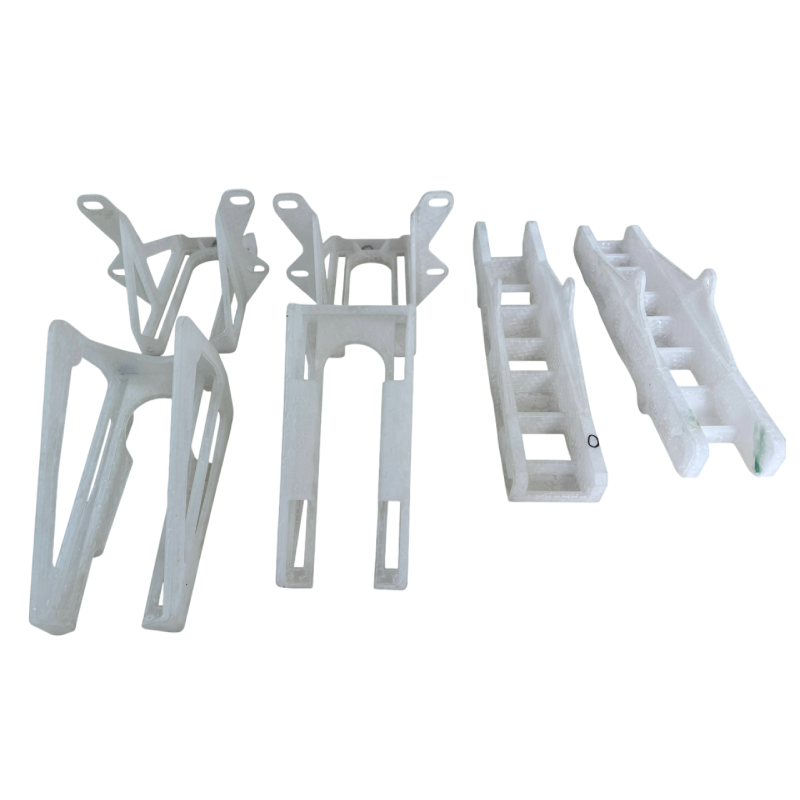
Investment casting is the "how" behind the "what." It refers to the ancient yet highly advanced Lost-Wax mechanism. This process involves a distinct sequence of steps that sets it apart from sand casting or die casting:
Pattern Creation: Wax is injected into a metal die to create a replica of the final part.
Assembly: Multiple wax patterns are mounted onto a central wax sprue, forming a tree.
Shell Building: The tree is dipped in ceramic slurry and stucco to build a hard shell (the "investment").
Burnout: The shell is heated, melting the wax out (hence "Lost-Wax") and leaving a perfect hollow cavity.
Pouring: Molten metal is poured into the pre-heated ceramic shell.
Why does this distinction matter? Sourcing a supplier effectively requires specifying the method. If you simply request "precision casting" for a stainless steel part, a supplier equipped only with die casting machines (which generally cannot handle steel's high melting point) might decline the bid or offer an unsuitable alternative.
Common Industry Synonyms
Geography often dictates terminology. In Asian manufacturing markets, including China and India, the term "Precision Casting" is used almost exclusively to imply "Investment Casting." In Western markets, the term is broader. When working with a global supply chain, clarification is vital. We recommend explicitly using "Investment Casting" or "Lost-Wax Casting" in your technical documentation to ensure you receive quotes for the correct process.
Technical Evaluation: Why Choose Investment Casting?
When an engineer selects investment casting, they are typically paying a premium over sand casting. This premium buys three specific technical advantages: dimensional accuracy, superior surface finish, and geometric freedom.
Dimensional Accuracy & Tolerances
The primary driver for choosing this process is the ability to hold tight tolerances "as-cast." The industry standard tolerance for investment casting is ±0.005 inch per inch (approximately CT4-CT6 ISO grades). This level of precision allows parts to go directly from the foundry to assembly in many applications.
Contrast this with Sand Casting, which typically holds tolerances in the CT10-CT12 range (approx. ±0.030 to ±0.060 inch). If a part designed for sand casting requires critical fitment, it must undergo extensive machining. Investment casting bypasses this need, delivering near-net-shape components that respect the designer’s original intent without massive material removal.
Surface Finish Capabilities
Fluid dynamics and aesthetic requirements often dictate the need for smooth surfaces. Investment casting typically achieves a surface finish of 125 RMS (Ra 3.2) directly out of the mold. With minor secondary finishing techniques, such as vibratory tumbling or blasting, this can be reduced to 63 RMS.
For applications involving fluid flow—such as pump impellers, valve bodies, or pipe fittings—this smoothness is critical. It reduces turbulence and friction losses within the system without requiring difficult internal polishing. Sand cast parts, with their rough, sandpaper-like texture (Ra 12.5+), often create unacceptable drag in these scenarios.
Design Complexity (The "Undercut" Factor)
The true superpower of Customized investment casting lies in its ability to handle undercuts. In permanent mold processes like Die Casting, the steel mold must separate to eject the part. This requirement imposes strict limitations: you cannot have features that lock the part inside the mold unless you pay for expensive, maintenance-heavy slides and cores.
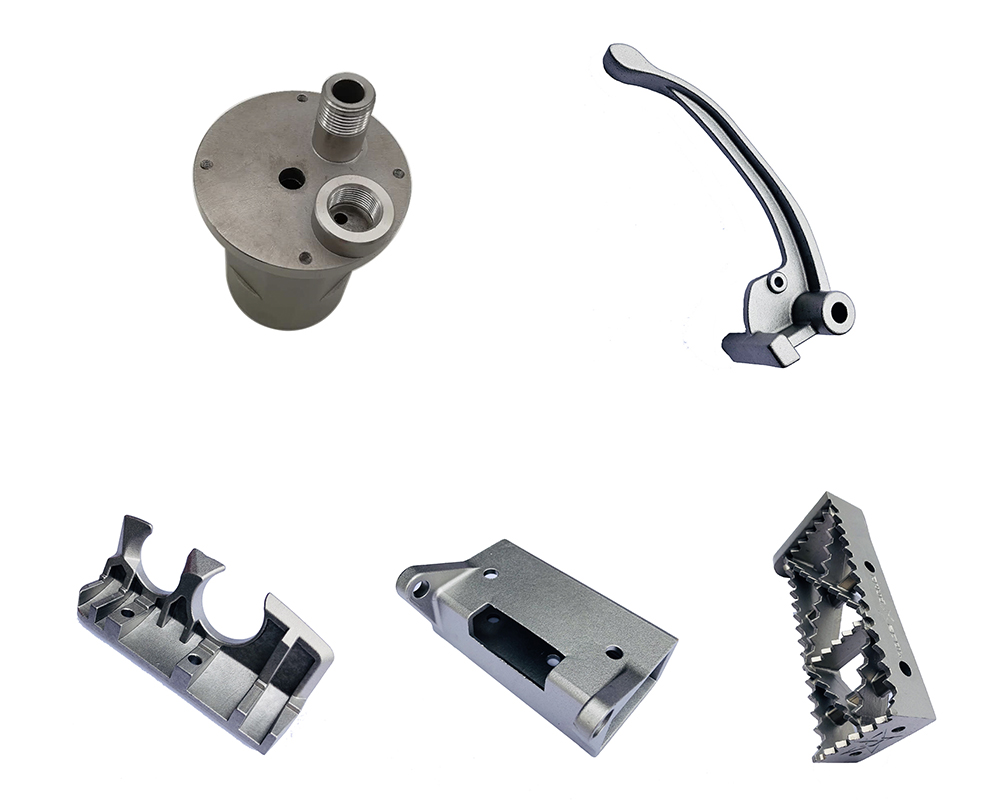
Investment casting uses a sacrificial mold. The ceramic shell is broken away from the metal part after cooling. Because the mold is destroyed, the part does not need to be ejected. This allows engineers to design complex internal channels, reverse drafts, and intricate undercuts that would be impossible or cost-prohibitive with other methods. This capability is why we see high adoption rates in Precision Casting Car Parts, such as turbocharger housings and exhaust manifolds, where internal airflow geometry is paramount for performance.
Material Compatibility and Versatility
One of the most significant divergence points between "precision casting" methods is material capability. While die casting offers precision, it is severely limited by melting points.
The Ferrous Advantage
Investment casting is the dominant choice for Stainless Steel Metal investment casting, carbon steel, and superalloys. The physics behind this is simple: molten steel is poured at temperatures exceeding 2700°F (1500°C).
If you attempted to pour molten steel into a die casting mold (typically made of H13 tool steel), the thermal shock would degrade the mold rapidly, causing "heat checking" and destroying the tooling investment. In investment casting, the ceramic shell is a refractory material capable of withstanding temperatures upwards of 3000°F without losing its shape. This makes it the standard for high-strength, corrosion-resistant industrial components.
Non-Ferrous Applications
While aluminum is the king of die casting, there is a strong case for Aluminum Investment precision casting under specific conditions. You should choose investment casting for aluminum when:
Volume is Low: Die casting tooling costs tens of thousands of dollars. Investment casting tooling is a fraction of that cost.
Complexity is High: If the aluminum part has internal cooling channels or undercuts (like aerospace avionics housings), die casting cannot form them.
Draft Angles: Die casting requires draft angles to eject the part. Investment casting requires zero draft, allowing for perfectly straight walls.
Hard-to-Machine Alloys
Modern engineering often utilizes Cobalt-based or Nickel-based superalloys (like Inconel) for extreme environments. These materials are notoriously difficult to machine; they harden rapidly and destroy cutting tools. Machining these parts from a solid billet is cost-prohibitive due to tool wear and material waste. Precision investment casting allows these alloys to be cast to near-net shape, requiring only minimal grinding on mating surfaces.
Analyzing the TCO: Tooling vs. Machining Costs
Procurement professionals often balk at the per-piece price of investment castings compared to sand castings. However, the evaluation must shift from "Cost per Pound" to "Total Cost of Ownership" (TCO).
The "Near-Net-Shape" Value Proposition
The business case for investment casting relies on the reduction of secondary operations. The raw casting is more expensive because the process is labor-intensive. However, the finished part cost is often lower.
The calculation logic is straightforward:
Cost of Investment Casting < (Cost of Cheap Sand Casting + CNC Machining Precision Casting Hours)
If a sand casting requires three different CNC setups to face off flanges, bore holes, and thread ports, the machining cost quickly eclipses the savings on the raw casting. Investment casting delivers those flanges and holes closer to the final size, often eliminating the roughing passes entirely.
Tooling Investment
Tooling strategy differs significantly between processes. Investment casting requires an aluminum injection die to create the wax patterns.
| Feature | Sand Casting Pattern | Investment Wax Die | Die Casting Mold |
| Material | Wood / Urethane / Metal | Aluminum | H13 Hardened Steel |
| Cost Tier | Low ($) | Medium ($$) | High ($$$$) |
| Lead Time | 2-4 Weeks | 4-6 Weeks | 8-12 Weeks |
| Life Cycle | Wears out faster | High (Wax is non-abrasive) | High (but risks heat checking) |
Because wax is soft and injected at low pressure, the aluminum dies used in investment casting suffer very little wear. They offer excellent scalability for "Medium Volume" production runs, typically ranging from 100 to 10,000 units per year.
Lead Time Considerations
One trade-off is time. Investment casting is a multi-step process involving repeated dipping and drying of ceramic shells. Each layer must dry under controlled humidity conditions to prevent cracking. This physical reality means lead times are measured in weeks. In contrast, high-pressure die casting creates a part every few seconds. Buyers must factor this production cycle into their inventory planning.
Selection Framework: When to Pivot?
Knowing when to switch processes is a hallmark of strategic sourcing. Use this framework to determine if investment casting is the right fit for your current project.
Decision Matrix
Risk Factors in Sourcing
When evaluating precision casting suppliers, audit their process controls. The critical risk in investment casting is porosity or shell inclusions. A high-quality supplier will demonstrate strict control over their shell drying room (humidity and temperature) and utilize vacuum casting capabilities for high-spec alloys. Without these controls, the "precision" aspect of the casting is compromised, leading to scrap during the machining stage.
Conclusion
Terminology should not obscure value. While "Precision Casting" is the goal, "Investment Casting" is the method that reliably delivers that goal for complex, high-melting-point components. It stands as the bridge between the roughness of sand casting and the high cost of machining from solid billet.
We recommend that buyers stop sourcing based solely on per-pound metal prices. Instead, evaluate the "Total Cost to Finished Part" by calculating the elimination of secondary machining operations. If your current machined parts or rough sand castings are driving up costs through high scrap rates or long machine times, it is time to pivot.
Ready to optimize your production costs? We encourage buyers and engineers to submit their technical drawings for a "Net-Shape Evaluation." Let us analyze if your current machined components can be converted into high-precision investment castings for significant long-term savings.
FAQ
Q: Why is it called "Investment" casting?
A: The term "investment" in this context is not financial. It comes from the archaic meaning of the word "invest," which means "to clothe" or "to surround." In the process, the wax pattern is completely invested (surrounded) by the ceramic slurry to form the mold. This ceramic clothing ensures every detail of the wax pattern is captured before the wax is melted away.
Q: Is precision casting stronger than die casting?
A: Generally, yes. Investment casting (precision casting) often produces stronger parts because it supports ferrous metals like steel, which are inherently stronger than the zinc or aluminum used in die casting. Furthermore, die casting can suffer from internal porosity due to high-pressure injection trapping air. Investment casting, especially when done in a vacuum, produces a denser, more uniform grain structure amenable to heat treatment.
Q: Can investment casting replace CNC machining entirely?
A: Not entirely, but it significantly reduces it. Investment casting replaces the "roughing" and "semi-finishing" stages of machining. It brings the part to "near-net shape." However, critical mating surfaces, bearing bores, or threaded holes that require extremely tight tolerances (e.g., ±0.001 inch) will still need a final CNC finish pass.
Q: What is the minimum wall thickness for high precision investment casting?
A: The standard minimum wall thickness is typically around 1.5mm to 2mm (0.060 to 0.080 inch). However, this depends on the flow length of the metal and the alloy being used. Highly fluid alloys can be cast thinner over short distances. This capability allows for significant weight reduction compared to sand casting, which requires thicker walls to prevent misruns.


