In modern manufacturing, few processes are as widely used and versatile as casting. From automotive components to industrial machinery, casting plays a fundamental role in shaping metal into functional parts. When people hear about casting parts, they often think of heavy industrial production, but the process itself is both straightforward in principle and highly adaptable in practice. Casting involves pouring molten material—typically metal—into a mold where it solidifies into a desired shape. This method allows manufacturers to create complex geometries that would be difficult or costly to achieve through machining alone.
From our perspective in precision manufacturing, casting is not just a production method but a solution for balancing design flexibility, material efficiency, and cost control. Over the years, casting technology has evolved significantly, allowing for higher accuracy, better surface finishes, and improved material properties. Today, casting parts are used in a wide range of industries, including construction, automotive, aerospace, energy, and equipment manufacturing.
Understanding what casting is and how it works provides valuable insight into why this process remains essential in both traditional and advanced manufacturing environments.
The Basic Principle of Casting
Casting is based on a simple yet powerful idea: shaping materials while they are in a liquid state.
From Liquid to Solid Form
The process begins by heating a material, usually metal, until it reaches a molten state. This liquid metal is then poured into a mold cavity that has been designed to match the final shape of the product.
As the material cools, it solidifies and takes the shape of the mold. Once fully cooled, the solidified part is removed and may undergo finishing processes such as trimming, machining, or surface treatment.
Why Casting Is So Widely Used
Casting allows manufacturers to produce parts with complex internal and external shapes. Unlike machining, which removes material from a solid block, casting forms the part directly, reducing material waste.
This efficiency makes casting an attractive option for producing both small components and large industrial parts.
Common Types of Casting Processes
Different casting methods are used depending on the material, required precision, and production volume.
Sand Casting
Sand casting is one of the oldest and most widely used methods. It involves creating a mold from sand, which is then filled with molten metal.
This method is suitable for large parts and low to medium production volumes.
Investment Casting
Investment casting uses a wax pattern that is coated with a ceramic material to form a mold. Once the mold is hardened, the wax is melted away, leaving a cavity for the molten metal.
This process produces highly detailed and precise parts with smooth surfaces.
Die Casting
Die casting involves injecting molten metal into a metal mold under high pressure. This method is ideal for high-volume production of small to medium-sized parts with consistent dimensions.
Lost Foam Casting
In this process, a foam pattern is used to create the mold. The foam evaporates when molten metal is poured into the mold, leaving behind the final part shape.
Casting Process Comparison
Casting Method | Key Advantage | Typical Application | Production Volume |
Sand Casting | Low cost, flexible | Large components | Low to medium |
Investment Casting | High precision | Complex parts | Medium |
Die Casting | High efficiency | Mass production parts | High |
Lost Foam Casting | Complex shapes | Engine components | Medium |
This comparison helps illustrate how different casting methods serve different manufacturing needs.
Materials Used in Casting Parts
Casting is not limited to a single type of material. In fact, one of the biggest advantages of producing casting parts is the flexibility to work with a wide range of metals and alloys. The choice of material depends on the required mechanical properties, environmental conditions, weight considerations, and cost targets of the final product. Each material category brings its own strengths and application advantages, making casting suitable for diverse industries.
Iron and Steel
Iron and steel are among the most commonly used materials in casting due to their excellent strength, durability, and wear resistance. Cast iron is particularly valued for its good fluidity and vibration damping properties, making it ideal for engine blocks, machine bases, and heavy-duty components. Steel casting, on the other hand, provides higher tensile strength and toughness, which is essential for structural parts exposed to high stress or impact. These materials are widely used in construction equipment, industrial machinery, and automotive systems where reliability is critical.
Aluminum Alloys
Aluminum alloys are favored for applications that require a balance between strength and lightweight performance. Aluminum casting parts are significantly lighter than iron or steel, which helps improve energy efficiency in transportation and reduces overall system weight. In addition, aluminum offers good corrosion resistance and thermal conductivity, making it suitable for automotive components, aerospace structures, and electronic housings. Its ability to form complex shapes with relatively smooth surfaces also makes it a popular choice in modern manufacturing.
Copper and Brass
Copper and brass are commonly used when electrical conductivity, corrosion resistance, and aesthetic appearance are important. Copper casting parts are often used in electrical systems, connectors, and heat exchangers due to their excellent conductivity and thermal performance. Brass, an alloy of copper and zinc, provides added strength and improved machinability, making it suitable for valves, fittings, and decorative components. These materials are frequently found in plumbing systems, electrical equipment, and architectural applications.
Specialty Alloys
For more demanding applications, specialized alloys are developed to meet specific performance requirements. These alloys may include elements such as nickel, chromium, or molybdenum to enhance properties like heat resistance, wear resistance, corrosion resistance, or high-temperature stability. Specialty alloys are often used in aerospace, energy, and high-performance industrial equipment where standard materials may not meet operational demands. By selecting the right alloy composition, manufacturers can ensure that casting parts perform reliably even under extreme conditions.
Advantages of Casting Parts
Casting offers several benefits that make it a preferred manufacturing method in many industries.
Complex Shapes Can Be Achieved Easily
Casting allows for the production of parts with intricate geometries, including internal cavities and complex contours.
Reduced Material Waste
Since casting forms the part directly, there is less material waste compared with subtractive manufacturing processes.
Cost Efficiency for Large Production
For certain production volumes, casting can be more cost-effective than machining or fabrication methods.
Versatility Across Industries
Casting parts are used in a wide range of applications, from heavy machinery to precision components.
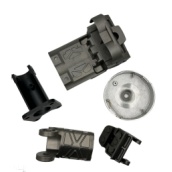
Limitations of Casting
While casting has many advantages, it is important to understand its limitations.
Surface Finish May Require Additional Processing
Some casting methods produce rough surfaces that need finishing processes such as grinding or machining.
Dimensional Accuracy Varies by Method
Precision depends on the casting technique used. High-precision applications may require additional machining.
Potential for Defects
Casting defects such as porosity, shrinkage, or inclusions can occur if the process is not carefully controlled.
Where Casting Parts Are Used
Casting parts are found in almost every industrial sector.
Automotive Industry
Engine blocks, transmission housings, and brake components are commonly produced using casting methods.
Construction and Machinery
Heavy equipment components such as housings, frames, and structural parts often rely on casting.
Energy and Power Generation
Casting is used to produce turbine components, pump housings, and pipeline fittings.
Industrial Equipment
Many machine parts require the strength and design flexibility that casting provides.
Quality Control in Casting Manufacturing
Ensuring the quality of casting parts requires strict control throughout the manufacturing process.
Material Selection
Choosing the right material is critical for achieving the desired performance characteristics.
Mold Design
Accurate mold design ensures that the final part meets dimensional and structural requirements.
Inspection and Testing
Casting parts are often inspected using visual checks, dimensional measurements, and non-destructive testing methods.
Conclusion
Casting remains one of the most important manufacturing processes for producing metal components. By transforming molten material into solid forms, it enables the creation of complex and durable casting parts used across a wide range of industries. From automotive systems to industrial machinery, casting provides a practical solution for achieving both design flexibility and production efficiency.
As industry demands continue to grow, casting technology continues to improve, offering higher precision and better performance. Understanding what casting is and how it works helps businesses choose the right manufacturing approach for their applications.
At Foshan Zeren Precision Casting Co., Ltd., we are committed to providing reliable and high-quality casting solutions tailored to modern industrial needs. If you are looking for dependable metal casting components, our team is ready to support your project with professional expertise and manufacturing capabilities. Feel free to contact us to learn more about how our casting products can meet your requirements.
FAQ
What is casting in manufacturing?
Casting is a manufacturing process where molten material is poured into a mold and allowed to solidify into a desired shape.
What are casting parts used for?
Casting parts are used in various industries including automotive, construction, energy, and machinery due to their strength and design flexibility.
Which casting method is best for precision parts?
Investment casting is often used for high-precision parts because it produces detailed shapes with smooth surfaces.
What materials are commonly used in casting?
Common materials include iron, steel, aluminum, copper, and various alloys depending on the application requirements.


