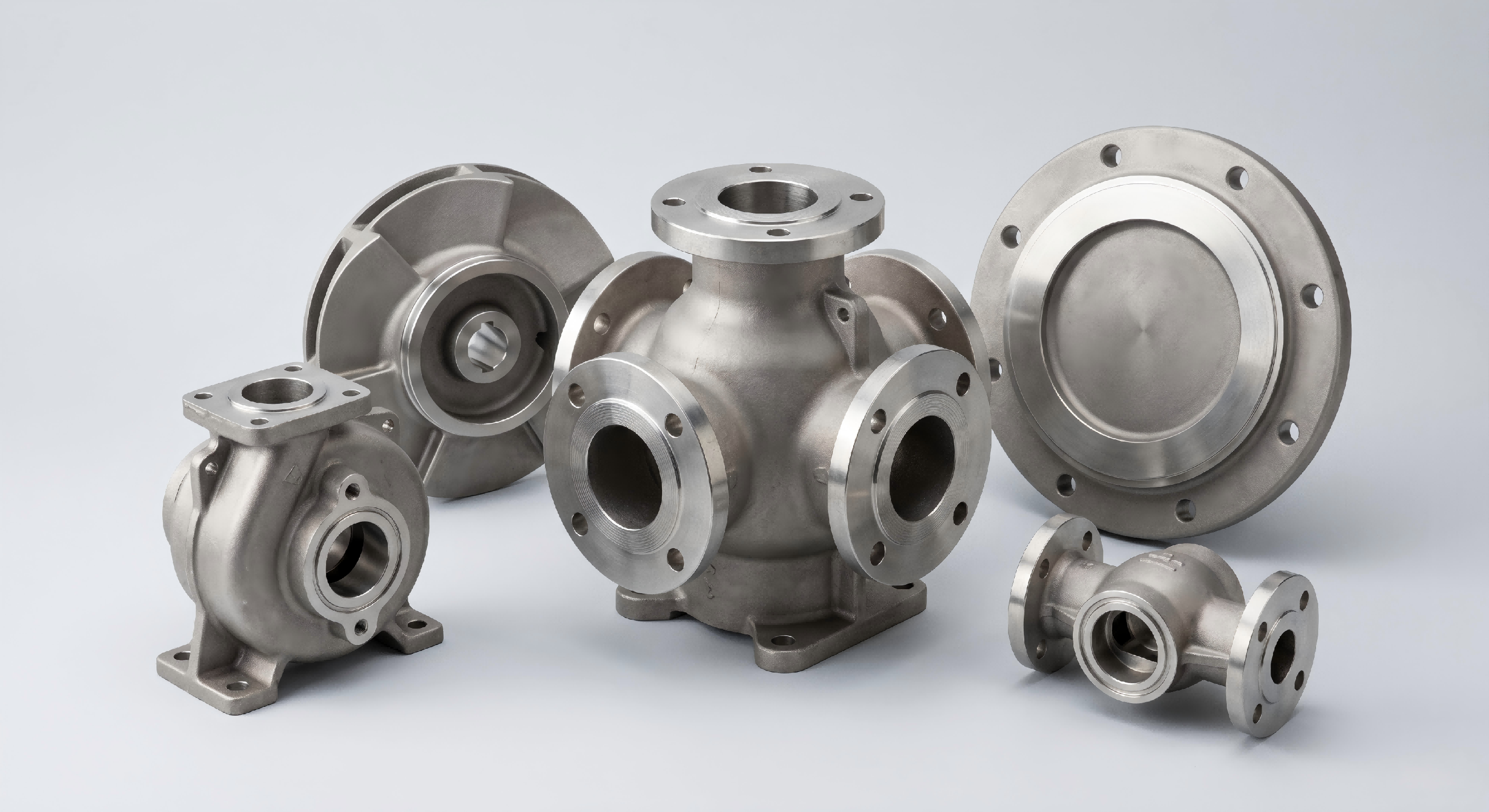
Duplex Stainless Steel Investment Casting for 2205 & 2507 Cast Parts


Custom duplex stainless steel investment cast and CNC machined components for marine, petrochemical, chemical-processing, pump and valve, and corrosion-critical industrial applications.


Zeren supports duplex stainless steel investment casting based on customer drawings, samples, material requirements, and service conditions. We work with commonly used duplex stainless steel grades such as 2205 and 2507, with CNC machining and surface finishing available for critical dimensions, sealing surfaces, and functional areas.

Duplex stainless steel investment casting parts for marine and chemical applications
Explore Duplex Stainless Steel Casting Solutions

Quickly find duplex stainless steel grade options, 2205 vs 2507 comparison, typical components, industry applications, casting and machining support, finishing methods, quality control, and RFQ guidance for your project.


Find duplex stainless steel grades, 2205 vs 2507 selection guidance, typical cast components, machining options, finishing methods, quality control, and RFQ information for your custom project.

Why Duplex Stainless Steel Works Well for Investment Casting


Duplex stainless steel is selected when a component needs both strong corrosion resistance and higher mechanical strength. For custom cast parts used in chloride-containing, marine, chemical, or pressure-related environments, duplex stainless steel can provide a practical material solution when standard stainless steel may not be sufficient.

Strong Corrosion Resistance
Duplex stainless steel offers strong resistance to corrosion in demanding environments, especially where moisture, chlorides, seawater, or chemical media may affect long-term service performance.

Higher Mechanical Strength

Compared with many conventional austenitic stainless steels, duplex stainless steel provides higher mechanical strength, making it suitable for components exposed to pressure, load, vibration, or heavy-duty operating conditions.

Better Resistance to Stress Corrosion Cracking

Duplex stainless steel is often considered for applications where chloride-related stress corrosion cracking is a concern, such as marine, chemical, and fluid-handling environments.

Suitable for Complex Cast Geometry

Investment casting can form complex duplex stainless steel part shapes such as valve bodies, pump components, fittings, brackets, flow passages, bosses, ribs, and connection features before secondary machining.

Good Compatibility with CNC Machining

Critical surfaces such as sealing faces, bores, threaded holes, mounting areas, and assembly datums can be CNC machined after casting to meet functional requirements.

Common Duplex Stainless Steel Grades for Investment Casting


The most commonly discussed duplex stainless steel grades for custom casting projects are 2205 and 2507. Grade selection should be based on the working environment, corrosion severity, mechanical load, machining needs, and project cost expectations.

2205 Duplex Stainless Steel
2205 duplex stainless steel is a commonly used duplex grade for components requiring a balance of corrosion resistance, strength, and cost efficiency. It can be considered for pump and valve parts, marine-related components, chemical-processing parts, and industrial fluid system components exposed to moderately aggressive service conditions.
Suitable For
- Pump and valve components
- Marine-related fittings
- Chemical-processing parts
- Fluid system components
- Corrosion-resistant machinery parts
2507 Super Duplex Stainless Steel
2507 super duplex stainless steel is used for more severe corrosive environments where higher resistance to chloride-related corrosion is required. It can be considered for seawater-related, offshore, petrochemical, desalination, and highly corrosion-critical applications.
Suitable For
- Seawater-related components
- Offshore and marine applications
- Petrochemical equipment parts
- High-chloride service environments
- Corrosion-critical pump and valve parts
Common NameWrought / Plate / Bar ReferenceCast Grade ReferenceNotes
2205 Duplex Stainless SteelUNS S31803 / S32205, EN 1.4462ASTM A890/A995 Grade 4A, CD3MN, UNS J92205Common duplex option for pump, valve, marine and chemical-related cast parts
2507 Super Duplex Stainless SteelUNS S32750, EN 1.4410ASTM A890/A995 Grade 5A, CE3MN, UNS J93404Higher corrosion margin for seawater, offshore, desalination and highly aggressive chloride service
2205 vs 2507 Duplex Stainless Steel: Which Grade Is More Suitable?
Both 2205 and 2507 are commonly used duplex stainless steel grades, but they are not selected for the same level of corrosion severity. 2205 is often suitable for general duplex stainless steel applications, while 2507 is usually considered for more aggressive chloride-containing, seawater-related, offshore, or petrochemical environments.
Selection Factor22052507
PositioningDuplex stainless steelSuper duplex stainless steel
Corrosion levelMedium to high corrosion environmentsSevere chloride, seawater, offshore or desalination environments
Strength requirementHigh strength compared with common austenitic stainless steelVery high strength and corrosion margin
Cost levelMore cost-efficient duplex optionHigher alloy cost
Typical usePump parts, valve parts, marine fittings, chemical equipmentSeawater parts, offshore equipment, desalination, severe petrochemical applications
When to chooseWhen 316L is not enough, but the environment is not extremely severeWhen higher resistance to pitting, crevice corrosion and chloride stress corrosion cracking is required
Why 2507 Has a Higher Corrosion Margin
Compared with 2205, 2507 contains higher chromium, molybdenum, and nitrogen. These elements help improve resistance to pitting and crevice corrosion in chloride-containing environments. Therefore, 2507 is usually considered when a higher corrosion margin is required for seawater, offshore, desalination, or aggressive chemical service.
Typical Chemical Composition Reference for Duplex Stainless Steel Grades
GradeUNS / ASTMDIN / ENCSiMnPSCrNiMoN
(%)(%)(%)(%)(%)(%)(%)(%)(%)
2205S318031.4462≤0.03≤1.00≤2.00≤0.04≤0.02021.0–23.04.5–6.52.5–3.50.08–0.20
S322051.4462≤0.03≤1.00≤2.00≤0.04≤0.02022.0–23.04.5–6.53.0–3.50.14–0.20
2507S327501.4410≤0.03≤0.80≤1.20≤0.035≤0.02024.0–26.06.0–8.03.0–5.00.24–0.32
Values are for general reference only. Chemical limits may vary by product form, casting standard, customer drawing, and applicable specification. Final requirements should follow the confirmed material standard and material certificate.

Typical Duplex Stainless Steel Components We Produce


Duplex stainless steel is commonly used for pump, valve, marine, petrochemical, chemical processing, and corrosion-resistant machinery components. We support custom duplex stainless steel investment castings based on customer drawings, with CNC machining, surface finishing, and inspection according to project requirements.

Duplex stainless steel valve body casting with machined sealing surfaces
Valve Bodies & Valve Components
Duplex stainless steel investment castings are suitable for valve bodies, valve covers, discs, seats, and other flow-control components used in corrosive or chloride-containing environments. 2205 and 2507 can be considered when higher strength and corrosion resistance are required compared with common austenitic stainless steels.
Duplex stainless steel pump housing casting with machined surfaces
Pump Housings, Covers & Impellers

We produce duplex stainless steel pump housings, covers, impellers, diffusers, and related pump components for fluid-handling systems. Investment casting helps form complex flow channels and near-net-shape geometry, while CNC machining can be used for sealing faces, bores, threads, and assembly surfaces.

Duplex stainless steel pipe fitting casting for fluid systems
Pipe Fittings & Fluid Connectors

Duplex stainless steel can be used for cast pipe fittings, fluid connectors, flanges, elbows, and coupling components where corrosion resistance, pressure-related performance, and dimensional consistency are important. These parts are commonly used in marine, chemical, petrochemical, and industrial fluid systems.

Duplex stainless steel marine fitting casting for seawater environments
Marine Hardware & Offshore Fittings

For marine and offshore environments, duplex stainless steel provides improved resistance to chloride-related corrosion compared with many conventional stainless steels. Typical applications include brackets, clamps, hardware fittings, support parts, and structural connection components exposed to seawater or humid operating conditions.

Duplex stainless steel chemical processing equipment parts for corrosion resistant service
Chemical Processing Equipment Parts

Duplex stainless steel castings are suitable for selected chemical processing equipment parts that require resistance to corrosive media, chloride-containing fluids, or demanding service conditions. Typical components may include pump and valve parts, connector bodies, mixer-related components, brackets, covers, and custom cast parts used around chemical handling systems.

Duplex stainless steel machinery casting for corrosive industrial environments
Corrosion-Resistant Machinery Components

Duplex stainless steel investment casting can also be used for custom machinery components that require a combination of strength, corrosion resistance, and machinable precision. These parts are often designed according to customer drawings and can be supplied with CNC machining, surface finishing, and inspection support.

Duplex Stainless Steel Casting Applications Across Industries


Duplex stainless steel castings are used in industrial applications where ordinary stainless steel may not provide enough corrosion margin or mechanical strength. The material is especially suitable for components exposed to chlorides, seawater, chemical fluids, moisture, pressure, or long-term corrosive service conditions.

Pump & Valve
Valve bodies, pump housings, impellers, diffusers, elbows, connector seats, and sealing-related components for corrosive fluid systems.
Petrochemical & Marine
Corrosion-resistant cast parts for chemical media, seawater-related service, offshore equipment, marine fittings, and petrochemical fluid-handling systems.
Chemical Processing
Custom cast and machined components used in chemical equipment, piping connections, fluid transfer systems, and corrosion-critical industrial assemblies.
Industrial Machinery
Heavy-duty machinery parts, brackets, housings, and connection components used in corrosive or moisture-exposed industrial environments.

Explore Industrial Machinery Solutions

Investment Casting and CNC Machining for Duplex Stainless Steel Parts


Many duplex stainless steel parts require both near-net-shape casting and secondary machining. Investment casting forms the main geometry, while CNC machining is used for critical dimensions, sealing surfaces, bores, threads, mounting areas, and assembly interfaces.

Duplex stainless steel investment casting and CNC machining process

1. Drawing or Sample Review

We review the drawing, 3D file, sample, material grade, corrosion environment, tolerance requirement, and surface finish needs before quotation.

2. Material and Process Evaluation

The suitable duplex stainless steel grade, such as 2205 or 2507, can be evaluated according to the working medium, chloride exposure, mechanical load, and cost expectation.
3. Tooling and Wax Pattern Production
Tooling is prepared according to the confirmed design, and wax patterns are produced for the investment casting process.
4. Duplex Stainless Steel Investment Casting
The silica sol investment casting process is used to produce duplex stainless steel components with complex shapes, stable casting quality, and good surface finish.
5. CNC Machining and Inspection
Critical surfaces and dimensions are machined after casting, followed by dimensional inspection and material verification when required.
Microstructure and Heat Treatment Considerations
Duplex stainless steel casting projects should consider chemical composition, heat treatment, cooling control, and ferrite-austenite phase balance. For corrosion-critical parts, material verification and heat treatment requirements should be confirmed according to the applicable standard and customer specification.

Surface Finishing Options for Duplex Stainless Steel Castings


Surface finishing can be selected according to corrosion resistance, appearance, cleaning requirement, assembly needs, and the final working environment. For duplex stainless steel castings, finishing should be evaluated together with material grade, part geometry, machining areas, and service conditions.

FinishSuitable For
Shot blastingGeneral matte surface and removal of casting residue
Sand blastingUniform surface texture and surface preparation
PolishingImproved appearance and smoother surface
PassivationImproved corrosion resistance of stainless surfaces
PicklingRemoval of scale or surface contamination after processing
ElectropolishingSelected applications requiring cleaner and smoother surfaces
Available finishing options depend on part geometry, material grade, surface requirement, production quantity, and customer specification.
Suggested Finishing Combinations
RequirementSuggested Option
Remove scale or processing contaminationPickling
Improve corrosion resistance after machining or finishingPassivation
Cleaner surface for selected applicationsElectropolishing
Better appearance or smoother touch surfacePolishing
Machined sealing or assembly surfacesCNC machining + local polishing if required

Quality Control for Duplex Stainless Steel Investment Castings


For duplex stainless steel casting projects, quality control should cover material verification, casting appearance, dimensional accuracy, CNC-machined surfaces, and application-specific corrosion or performance requirements. Zeren can support inspection based on customer drawings, samples, and project requirements.

Quality inspection for duplex stainless steel investment casting parts
1. Material Verification
Chemical composition inspection can be arranged to confirm duplex stainless steel grade requirements such as 2205 or 2507.
2. Dimensional Inspection
Key dimensions, bores, holes, sealing faces, machined surfaces, and assembly interfaces can be checked according to drawings.
3. Surface Appearance Check
Casting surface, blasting quality, polishing consistency, visible defects, and finishing results can be reviewed before shipment.
4. Machining Accuracy Control
Critical CNC-machined areas such as sealing faces, threads, datum surfaces, and mounting areas are checked according to tolerance requirements.
5. Sample Approval Before Batch Production
For new custom duplex stainless steel casting projects, samples can be produced and confirmed before full batch production.
Inspection Reports Available Upon Request
Chemical composition report
Dimensional inspection report
Surface appearance photos
CNC machining inspection records
Material certificate when available or required
Heat treatment record when required
Sample approval record before batch production

Explore Related Casting Solutions


Compare related casting materials and supporting manufacturing capabilities to find the right solution for your custom part.

Alternative Materials
Stainless Steel
For general corrosion resistance, clean surface quality, and versatile industrial use, stainless steel such as 304, 316, or 316L may be suitable.
Carbon Steel
For structural or cost-sensitive parts where corrosion resistance is not the main requirement, carbon steel may be a practical material option.

Explore Carbon Steel

Alloy Steel
For components requiring higher strength, toughness, wear resistance, or heat treatment response, alloy steel may be more suitable.

Explore Alloy Steel

Supporting Capabilities
Investment Casting
For complex duplex stainless steel geometries, near-net-shape production, smooth casting surfaces, and repeatable casting quality.
CNC Machining
For sealing faces, bores, threads, flat mounting surfaces, and other critical dimensions after duplex stainless steel casting.
Surface Finishing
For blasting, polishing, passivation, pickling, and other finishing requirements based on corrosion resistance, appearance, or functional needs.
Quality Assurance
For dimensional inspection, material verification, machined surface checks, and project-specific quality control documentation.
Frequently Asked Questions About Duplex Stainless Steel Investment Casting

Q1. What duplex stainless steel grades can be used for investment casting?


Common duplex stainless steel grades include 2205 and 2507. The suitable grade depends on the corrosion environment, mechanical load, chloride exposure, machining requirement, and customer specification.

Q2. What is the difference between 2205 and 2507 duplex stainless steel?


2205 is a commonly used duplex stainless steel grade that provides a good balance of corrosion resistance, strength, and cost efficiency. 2507 is a super duplex stainless steel grade used for more severe corrosive environments such as seawater, offshore, petrochemical, or high-chloride service conditions.

Q3. When should duplex stainless steel be considered instead of 316 stainless steel?


Duplex stainless steel may be considered when the part is exposed to chlorides, seawater, chemical media, higher mechanical loads, or service conditions where stronger corrosion resistance and higher strength are required.

Q4. Is duplex stainless steel suitable for pump and valve parts?


Yes. Duplex stainless steel is suitable for pump and valve components such as valve bodies, pump housings, impellers, diffusers, elbows, fittings, and other fluid control parts used in corrosive environments.

Q5. Can duplex stainless steel castings be CNC machined after casting?


Yes. Duplex stainless steel investment castings are often CNC machined after casting for sealing faces, bores, holes, threads, flat mounting areas, and other critical dimensions.

Q6. What information is needed for a duplex stainless steel casting quotation?


A drawing, 3D file, sample photo, material grade, quantity, tolerance requirement, surface finish requirement, and application environment will help us evaluate the most suitable casting and machining solution.

Q7. What is the cast grade reference for 2205 or 2507 duplex stainless steel?


For duplex stainless steel castings, customers may refer to ASTM A890 or ASTM A995 cast grade references such as CD3MN / Grade 4A for 2205-related applications and CE3MN / Grade 5A for 2507-related applications. Final material selection should follow the drawing, project specification, and applicable casting standard.

Q8. Can duplex stainless steel castings be passivated or pickled?


Yes. Duplex stainless steel castings can be shot blasted, sand blasted, pickled, passivated, polished, or electropolished depending on geometry, surface requirement, corrosion environment, and customer specification.


Need Support for a Duplex Stainless Steel Casting Project?

Send us your drawing, sample, material requirement, or application details, and our team will help evaluate a suitable duplex stainless steel investment casting and CNC machining solution for your custom component project.
Engineering support for custom duplex stainless steel casting projects