In marine engineering and shipbuilding, every component must withstand one of the harshest operating environments on earth. Saltwater corrosion, continuous mechanical stress, temperature fluctuations, and long service cycles all place high demands on materials and manufacturing processes. This is where casting parts play a crucial role. From propellers and pump housings to engine components and deck fittings, marine casting enables the production of complex, durable, and corrosion-resistant components that are essential for safe and efficient vessel operation. In our experience as a manufacturer of precision casting components, marine casting is not just about shaping metal—it is about ensuring long-term performance, structural reliability, and resistance to environmental challenges.
What is Marine Casting
Marine casting refers to the process of producing metal components specifically designed for use in marine environments through casting techniques. These components, often referred to as casting parts, are manufactured by pouring molten metal into molds to create precise shapes required for marine applications.
What distinguishes marine casting from general casting is its focus on:
Corrosion resistance in saltwater environments
High mechanical strength
Long-term durability
Complex geometry for specialized marine systems
Compliance with marine industry standards
Marine casting is widely used in shipbuilding, offshore platforms, marine equipment manufacturing, and repair applications.
Why Casting Parts Are Essential in Marine Applications
Marine systems operate in some of the most demanding environments, where components are continuously exposed to saltwater, humidity, mechanical stress, and temperature fluctuations. These conditions require parts that are not only durable but also precisely engineered to perform reliably over long periods. This is why casting parts play such a critical role in marine applications. Casting enables manufacturers to produce complex shapes that would be difficult or costly to achieve through other manufacturing methods, while also ensuring the structural strength required for heavy-duty use.
One of the key advantages of casting parts in marine engineering is their ability to accommodate intricate geometries. Components such as propellers, valve housings, and pump bodies often feature complex internal channels and curved surfaces that are essential for fluid dynamics and mechanical efficiency. Casting allows these shapes to be formed in a single process, reducing the need for extensive machining and minimizing material waste.
Another important benefit is material flexibility. Marine casting supports a wide range of corrosion-resistant alloys, enabling manufacturers to select materials that best suit specific applications. For example, bronze alloys are widely used for propellers due to their excellent resistance to seawater corrosion, while stainless steel is preferred for valves and shafts because of its strength and durability. This flexibility allows casting parts to meet diverse performance requirements across different marine systems.
Cost efficiency is also a major factor. Casting is suitable for both small-batch production and large-scale manufacturing, making it a practical choice for shipbuilders and marine equipment suppliers. By reducing machining time and material waste, casting helps control production costs while maintaining high-quality standards. At the same time, casting provides strong structural integrity, ensuring that components can withstand heavy loads, vibrations, and long-term use in challenging environments.
Customization further enhances the value of casting parts. Marine projects often require components tailored to specific vessel designs or operational conditions. Casting makes it possible to produce customized parts with precise dimensions and performance characteristics, supporting both new builds and replacement applications. Because of these combined advantages—complex design capability, material versatility, cost efficiency, structural strength, and customization—casting remains one of the most widely used manufacturing methods in the marine industry.
Common Marine Casting Parts
Marine casting is used to produce a wide variety of components across different ship systems, each with its own functional requirements and performance standards. Typical casting parts include propellers, pump bodies, valve housings, engine blocks, rudder components, deck fittings, gear housings, impellers, and anchoring system components.
Propellers, for example, require precise geometry and excellent corrosion resistance to ensure efficient propulsion and long service life. Pump bodies and impellers must handle fluid flow under pressure, often in corrosive environments. Valve housings and engine blocks demand high strength and dimensional stability, while rudder components and gear housings must withstand continuous mechanical stress and movement. Even deck fittings and anchoring components, though sometimes smaller in size, must maintain durability and reliability in harsh outdoor conditions.
Materials Used in Marine Casting
Material selection is one of the most critical aspects of marine casting, as it directly determines the performance and longevity of the final component. The right material must provide resistance to corrosion, mechanical wear, and environmental stress while maintaining strength and reliability.
Common materials used in marine casting parts include stainless steel, bronze alloys, aluminum alloys, cast iron, and duplex stainless steel. Stainless steel is valued for its strong corrosion resistance and mechanical strength, making it suitable for valves, shafts, and structural components. Bronze alloys are particularly well known for their excellent resistance to seawater corrosion, which is why they are widely used for propellers and bearings. Aluminum alloys offer the advantage of being lightweight while still providing good corrosion resistance, making them ideal for certain structural applications.
Marine Casting Processes
Several casting processes are used to manufacture marine casting parts, depending on the required precision, material, and production volume.
1. Sand Casting
Sand casting is one of the most widely used methods for marine components.
Suitable for large and heavy parts
Flexible and cost-effective
Ideal for low to medium production volumes
2. Investment Casting
Also known as lost-wax casting, this method is used for high-precision parts.
Produces smooth surface finishes
Suitable for complex geometries
High dimensional accuracy
3. Die Casting
Die casting is used for certain non-ferrous materials.
Process comparison
Casting Method | Advantages | Limitations |
Sand casting | Low cost, flexible | Rougher surface finish |
Investment casting | High precision | Higher cost |
Die casting | High efficiency | Limited to specific materials |
Selecting the right casting process depends on the application requirements.
Key Performance Requirements for Marine Casting Parts
Marine environments are highly demanding, so casting parts must meet strict performance standards.
Critical requirements include:
Corrosion resistance (especially against saltwater)
High mechanical strength
Fatigue resistance under repeated loads
Resistance to wear and abrasion
Dimensional stability over time
Failure to meet these requirements can lead to equipment malfunction, safety risks, and increased maintenance costs.
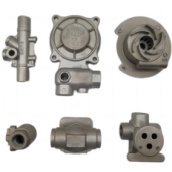
Surface Treatment and Finishing
To enhance performance, marine casting parts often undergo additional treatments after casting.
Common surface treatments include:
These processes improve both the appearance and durability of the final product.
Quality Control in Marine Casting
Quality control is essential in marine casting because even small defects can lead to serious operational problems.
Typical inspection methods include:
Inspection Method | Purpose |
Visual inspection | Detect surface defects |
Dimensional measurement | Ensure accuracy |
Ultrasonic testing | Identify internal flaws |
X-ray inspection | Detect hidden defects |
Mechanical testing | Verify strength and durability |
Strict quality control ensures that casting parts meet both customer requirements and industry standards.
Challenges in Marine Casting
Despite its advantages, marine casting also presents several challenges.
Common challenges include:
Controlling porosity in large castings
Achieving uniform material properties
Managing complex mold designs
Ensuring corrosion resistance over long periods
Balancing cost and performance
Overcoming these challenges requires advanced manufacturing techniques and experienced engineering teams.
How to Choose the Right Marine Casting Supplier
Selecting the right supplier is just as important as choosing the right material or process.
When evaluating a marine casting manufacturer, consider:
Experience in marine applications
Material expertise
Quality control capabilities
Production capacity
Customization support
Consistency in product quality
A reliable supplier can significantly improve the performance and lifespan of marine components.
Final Thoughts
Understanding what marine casting is helps highlight the importance of selecting the right materials, processes, and manufacturing partners for marine applications. In our experience, well-designed and properly manufactured casting parts are essential for ensuring the safety, durability, and efficiency of ships and offshore equipment. From propellers to pump housings, each component must withstand harsh marine conditions while maintaining consistent performance over time. Choosing the right casting approach and working with experienced manufacturers can significantly improve product reliability and reduce long-term operational costs.
For companies looking to source high-quality casting parts for marine applications, Foshan Zeren Precision Casting Co., Ltd. offers a range of solutions tailored to different requirements. If you are evaluating suppliers or planning new marine projects, it may be worthwhile to learn more about their capabilities and discuss your specific needs with their team.
FAQ
1. What is marine casting used for?
Marine casting is used to produce casting parts such as propellers, valves, pump housings, and engine components that operate in marine environments.
2. What materials are best for marine casting parts?
Common materials include stainless steel, bronze alloys, and aluminum alloys due to their corrosion resistance and durability in seawater.
3. Why are casting parts important in marine engineering?
Casting parts are important because they allow complex, durable, and corrosion-resistant components to be manufactured efficiently for marine systems.
4. How do I choose the right marine casting process?
The choice depends on part size, complexity, material, and production volume. Sand casting is suitable for large parts, while investment casting is ideal for precision components.


