Are you curious about how intricate metal parts are made? Investment casting is a fascinating process that creates high-quality components for various industries. This method is essential in manufacturing, offering precision and versatility in producing casting parts.
In this article, we'll explore the different types of investment casting. You'll learn about their unique benefits and applications. Join us as we highlight Foshan Zeren Precision Casting Co., Ltd., a leader in this innovative field.
Understanding Casting Parts
Casting parts are essential components used across various industries. They are created through processes like investment casting, which allows for intricate shapes and precise dimensions.
Definition of Casting Parts
Casting parts refer to metal components formed by pouring molten metal into molds. This method captures detailed designs, making it ideal for complex geometries.
● Materials Used: Common materials include stainless steel, carbon steel, and aluminum alloys.
● Production Methods: Various casting methods exist, but investment casting stands out for its precision and surface finish.
Common Applications of Casting Parts
Casting parts are utilized in numerous sectors, reflecting their versatility and reliability. Here are some key industries and their applications:
● Automotive: Engine components, transmission housings, and brake parts rely on casting for strength and durability.
● Aerospace: Critical parts like turbine blades and structural components demand high precision and lightweight characteristics.
● Medical: Surgical instruments and implants require casting parts that meet strict safety and quality standards.
Industry | Common Casting Parts | Key Benefits |
Automotive | Engine blocks, valve bodies | High strength, lightweight |
Aerospace | Turbine blades, landing gear components | Precision, reliability |
Medical | Surgical tools, prosthetics | Biocompatibility, strict tolerances |
Importance of Precision and Quality in Casting Parts
Precision and quality are non-negotiable in casting parts. They directly impact performance, safety, and longevity.
● Dimensional Accuracy: Casting processes must adhere to strict tolerances to ensure parts fit and function correctly.
● Surface Finish: A smooth surface reduces friction and wear, enhancing the lifespan of components.
● Quality Control: Rigorous testing and inspection are essential to maintain high standards.
Zeren Precision Casting Co., Ltd. exemplifies excellence in producing high-quality casting parts. With over 30 years of experience, Zeren specializes in investment casting, ensuring every piece meets industry standards. Their focus on precision engineering and advanced manufacturing techniques allows them to deliver customized solutions for a wide array of applications.
Whether it's in the automotive, aerospace, or medical field, Zeren's commitment to quality and innovation sets them apart. They understand the critical nature of casting parts and work tirelessly to ensure their clients receive the best products possible. By leveraging advanced technologies like 3D printing and CNC machining, Zeren enhances the casting process, providing clients with reliable and precise components.

Main Types of Investment Casting
Investment casting is a versatile method for producing highly detailed and precise casting parts. Among the various techniques, ceramic shell casting and solid mold investment casting stand out due to their unique advantages and applications.
1. Ceramic Shell Casting
Ceramic shell casting is a popular technique known for its ability to create complex geometries. This process involves creating a thin ceramic shell around a wax pattern. Once the shell hardens, the wax is melted away, leaving a mold for the molten metal.
● Advantages:
○ Complex Geometries: It excels at producing intricate designs that are difficult to achieve with other methods.
○ Superior Surface Finish: The ceramic shell provides an excellent surface finish, reducing the need for extensive machining.
○ High Precision: This method allows for tight tolerances, making it ideal for critical applications.
● Typical Applications:
○ Aerospace Components: Parts like turbine blades benefit from the precision and lightweight characteristics of ceramic shell casting.
○ Medical Equipment: Surgical instruments and implants require high-quality casting parts, which this method delivers effectively.
Zeren Precision Casting Co., Ltd. utilizes ceramic shell casting to produce intricate designs. Their expertise ensures that every part meets stringent quality standards while maintaining a superior surface finish. This capability is crucial in industries where precision is paramount.
2. Solid Mold Investment Casting
Solid mold investment casting is another effective method, primarily used for simpler designs. It involves creating a solid mold around a wax pattern, which is then removed to form the cavity for pouring molten metal.
● Explanation:
○ This technique is straightforward and typically involves less preparation than ceramic shell casting.
○ It is particularly useful for producing small to medium-sized parts.
● Use Cases:
○ Jewelry: Solid mold casting is widely used in the jewelry industry for creating detailed designs.
○ Dental Applications: It also finds applications in dental prosthetics, where precision is crucial.
● Benefits and Limitations:
○ Benefits:
■ Cost-effective for smaller production runs.
■ Faster turnaround times compared to more complex methods.
○ Limitations:
■ Less suitable for highly intricate designs compared to ceramic shell casting.
■ Surface finish may require additional machining.
Zeren's capabilities in solid mold investment casting allow them to produce customized solutions tailored to specific needs. Their experience in this area ensures that clients receive high-quality casting parts that meet their unique requirements.
Casting Method | Advantages | Typical Applications |
Ceramic Shell Casting | Complex geometries, superior finish | Aerospace, medical equipment |
Solid Mold Investment | Cost-effective, faster production | Jewelry, dental applications |
Through these two methods, investment casting proves to be an essential process for creating high-quality casting parts across various industries. Zeren's commitment to excellence ensures they remain a trusted partner in delivering innovative casting solutions.
Investment Casting Techniques
Investment casting techniques vary widely, each suited for different applications and requirements. Understanding these methods helps in selecting the right approach for producing high-quality casting parts.
1. Gravity-Fed Casting
Gravity-fed casting is one of the simplest and most commonly used methods in investment casting. In this process, molten metal flows into the mold cavity using gravity.
● Overview: The mold is positioned above the pouring basin, allowing gravity to pull the metal into the mold.
● Pros:
○ Simple setup and operation.
○ Cost-effective for larger production runs.
○ Suitable for a variety of metals.
● Cons:
○ Limited to parts that can be filled by gravity.
○ May not achieve the same precision as other methods.
Gravity-fed casting is often used in mass production for larger components like engine blocks and housings. It’s an excellent choice when speed and efficiency are priorities.
2. Vacuum Investment Casting
Vacuum investment casting involves creating a vacuum environment to draw molten metal into the mold. This technique is particularly beneficial for achieving high-quality casting parts.
● Benefits:
○ Reduces porosity, leading to denser and stronger parts.
○ Minimizes oxidation of the molten metal.
○ Ideal for complex geometries and thin-walled components.
● Applications:
○ Commonly used in aerospace and medical industries, where reliability is critical.
○ Preferred for high-stress components that require superior mechanical properties.
Zeren Precision Casting Co., Ltd. employs advanced vacuum casting technology to enhance precision in their components. This capability ensures that clients receive durable and high-quality casting parts.
3. Centrifugal Investment Casting
Centrifugal investment casting uses centrifugal force to distribute molten metal into the mold. It’s particularly effective for symmetrical parts.
● Description: The mold is rotated at high speeds, forcing the metal against the mold walls.
● Ideal Use Cases:
○ Pipes, tubes, and other cylindrical components.
○ Parts requiring uniform thickness and density.
Method | Advantages | Typical Applications |
Gravity-Fed Casting | Cost-effective, simple | Engine blocks, large components |
Vacuum Investment Casting | Reduces porosity, high precision | Aerospace, medical devices |
Centrifugal Investment Casting | Uniform thickness, strong components | Cylindrical parts, pipes |
Zeren's expertise in centrifugal casting allows them to produce high-quality symmetrical parts with excellent dimensional accuracy. Their focus on quality ensures that every piece meets stringent industry standards.
4. Pressure-Assisted Casting
Pressure-assisted casting techniques enhance the filling of molds by applying pressure to the molten metal. This method is effective for intricate designs.
● Overview: By applying pressure, it ensures that the metal fills every part of the mold efficiently.
● Benefits:
○ Reduces defects caused by air pockets and incomplete filling.
○ Enhances the quality of the finished product.
● Scenarios:
○ Ideal for complex geometries and thin-walled sections.
○ Often used in applications requiring high precision and reliability.
Zeren implements pressure-assisted methods to tackle complex parts, ensuring consistent quality and performance. Their advanced techniques help meet the demanding needs of various industries.
Through these investment casting techniques, manufacturers can select the best method for their specific needs, ensuring high-quality casting parts that meet industry standards.
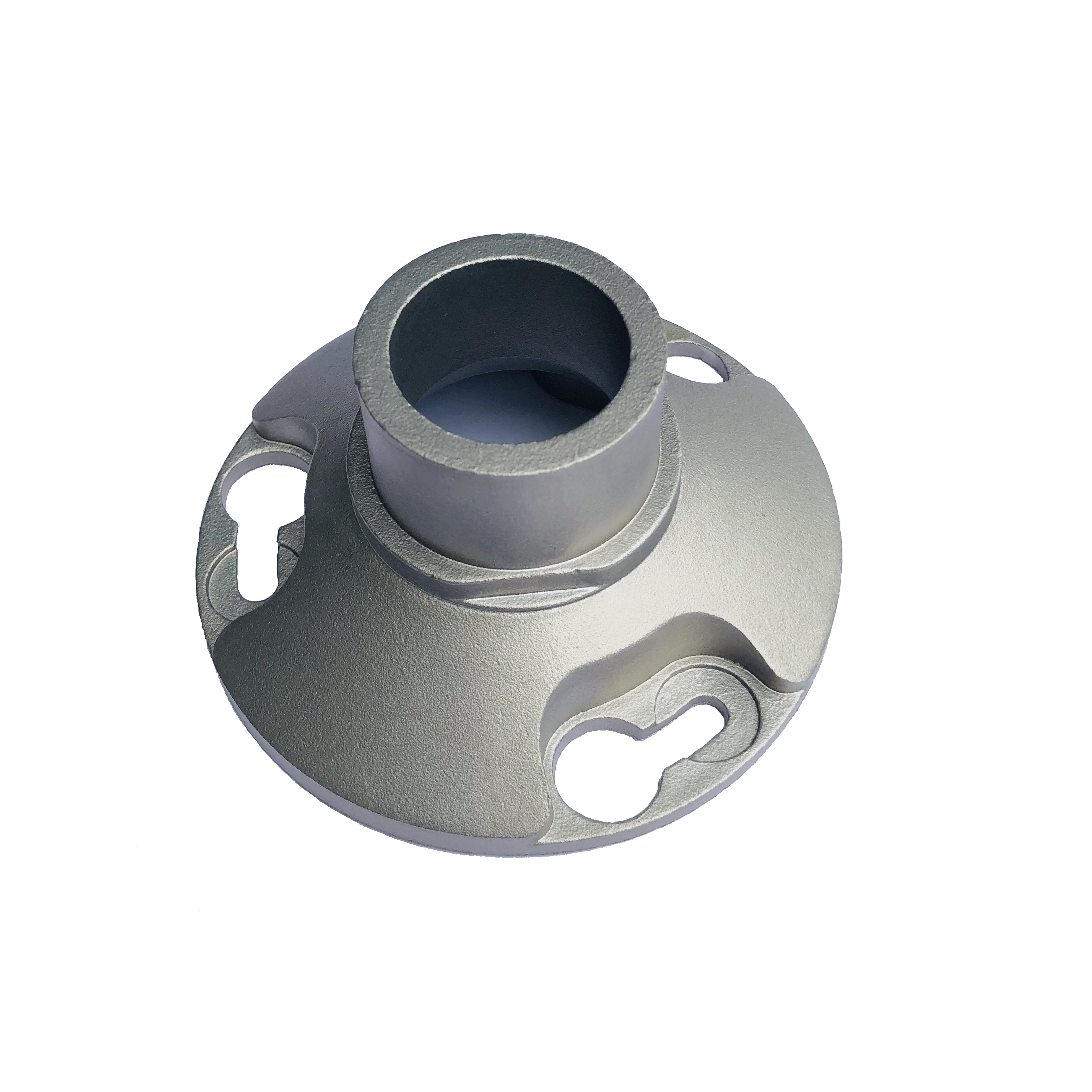
Material Variations in Investment Casting
When it comes to investment casting, the choice of materials plays a crucial role in determining the quality and performance of the final casting parts. Two prominent methods are silica sol casting and water glass casting, each offering unique advantages and applications.
1. Silica Sol Casting
Silica sol casting utilizes a silica sol binder, which is a colloidal solution of silica particles. This method is known for its ability to produce high-precision casting parts.
● Explanation: The silica sol forms a thin, strong shell around the wax pattern, allowing for intricate designs and excellent surface finishes.
● Advantages:
○ Superior Surface Finish: The smooth surface reduces the need for further machining, saving time and costs.
○ High Dimensional Accuracy: This method provides tight tolerances, making it ideal for complex geometries.
● Industries Benefiting from Silica Sol Casting:
○ Automotive: Engine components and transmission parts require high precision and durability.
○ Aerospace: Critical components like turbine blades benefit from the strength and lightweight properties achieved through silica sol casting.
Zeren Precision Casting Co., Ltd. emphasizes silica sol casting to achieve superior dimensional accuracy. Their commitment to quality ensures that every casting part meets stringent industry standards, making them a reliable partner for clients in demanding sectors.
2. Water Glass Casting
Water glass casting, also known as sodium silicate casting, uses a sodium silicate binder. This method is often favored for its cost-effectiveness and efficiency in production.
● Overview: The process involves creating molds with a mixture of sand and water glass, which hardens when exposed to CO2. It’s simpler and more economical compared to silica sol casting.
● Cost Benefits:
○ More affordable materials and quicker production times make it a popular choice for larger runs.
○ Lower overall costs can lead to significant savings for manufacturers.
● Comparison with Silica Sol Casting:
○ Surface Finish: While water glass casting may not achieve the same level of surface smoothness as silica sol, it still offers reasonable quality.
○ Production Speed: Water glass casting typically allows for faster mold production, making it suitable for larger components.
Casting Method | Surface Finish | Production Speed | Typical Applications |
Silica Sol Casting | Superior | Moderate | Automotive, aerospace |
Water Glass Casting | Good, but less smooth | Faster | Large components, general manufacturing |
Zeren's ability to provide water glass casting solutions is particularly beneficial for larger components. Their expertise in this area ensures that clients receive high-quality casting parts at competitive prices, making them a go-to choice for businesses looking to optimize their production processes.
By understanding these material variations in investment casting, manufacturers can make informed decisions that align with their specific needs and industry requirements. Whether opting for silica sol or water glass casting, the focus remains on achieving high-quality, reliable casting parts.
Conclusion
Investment casting offers various techniques, each with unique applications.
Understanding these methods is crucial for selecting the right one for specific needs.
Choosing the appropriate casting type ensures quality and performance in casting parts.
For tailored solutions, consult experts like Zeren Precision Casting. Their experience can help you find the best casting method for your project.
FAQ
Q: What is the best type of investment casting for intricate designs?
A: Silica sol casting is ideal for intricate designs due to its superior surface finish and dimensional accuracy.
Q: How does investment casting compare to other casting methods?
A: Investment casting offers higher precision and better surface finishes compared to methods like sand casting.
Q: What materials are commonly used in investment casting?
A: Common materials include stainless steel, carbon steel, and aluminum alloys.
Q: Can investment casting be used for both small and large production runs?
A: Yes, investment casting is versatile and suitable for both small and large production runs.
Q: What are the cost implications of different investment casting methods?
A: Silica sol casting is more expensive due to its precision, while water glass casting is more cost-effective for larger runs.
Q: How does Zeren ensure the quality and precision of its casting parts?
A: Zeren employs advanced technologies and rigorous quality control processes to ensure high-quality casting parts.


