| Availability: | |
|---|---|
Part Design
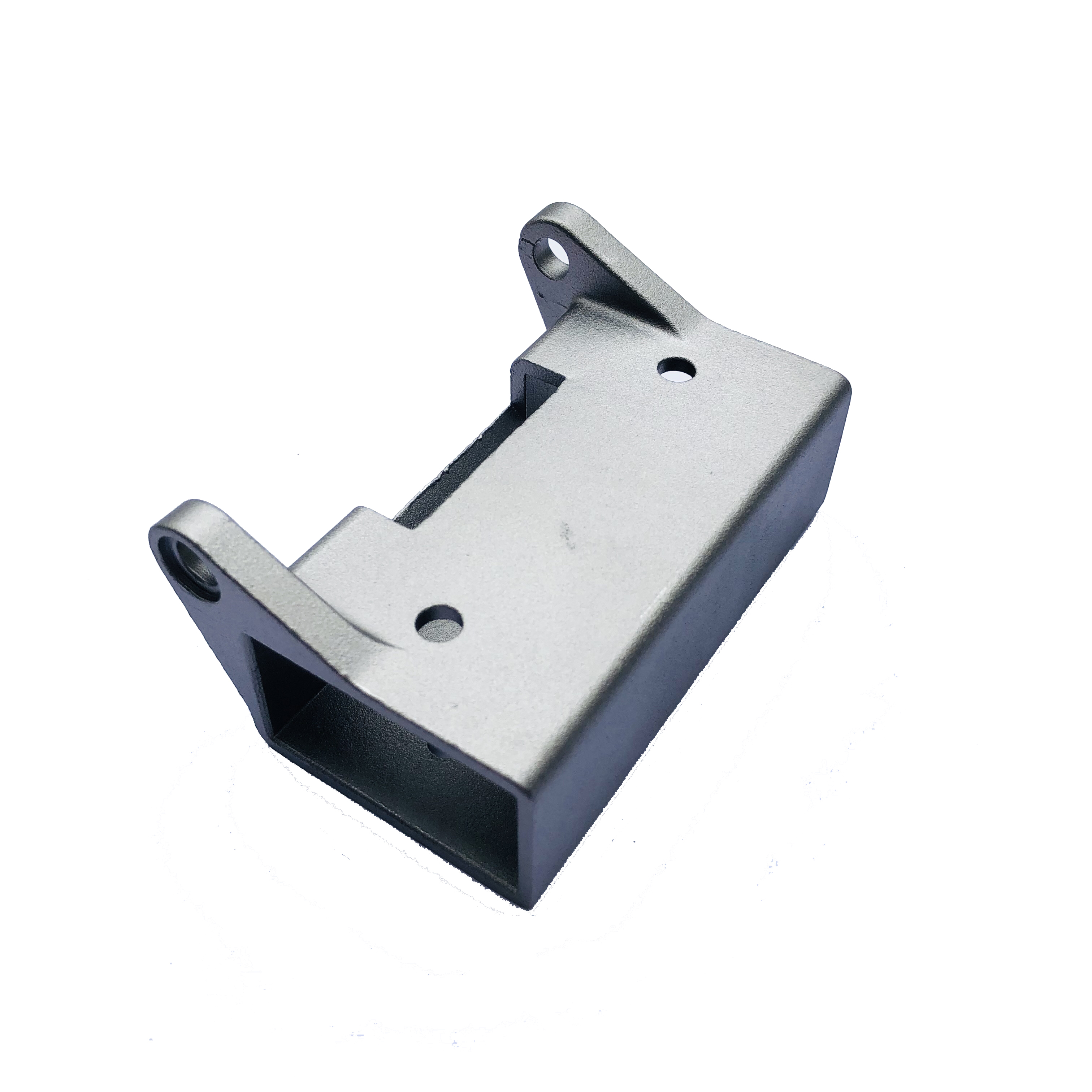
The illustrated bracket features a broad mounting face, an open central section and end connection features. This combination of flat surfaces and three-dimensional geometry makes casting feasibility an important part of the design review.
For similar components, our review focuses on:
Wall thickness transitions between the main body and connection lugs.
Corner radii around openings and recessed areas.
Hole locations and access for secondary machining.
Machining allowances on mounting and mating surfaces.
Reference surfaces for dimensional inspection.
Any proposed design adjustments are submitted for approval before tooling begins.
Casting Process
Lost wax casting uses an expendable wax pattern and a ceramic shell to reproduce the component geometry. For custom brackets, this process can integrate raised sections, side walls and connection features into one casting.
Following drawing approval, production typically includes wax pattern injection, shell building, dewaxing, metal pouring, shell removal and casting cleanup. Secondary machining and surface treatment follow as specified.
Investment casting provides the main component shape, while features requiring closer tolerances are finished through machining. Small holes and difficult-to-form details are reviewed individually to determine whether they should be cast or machined.
Custom Options
The manufacturing specification is developed around the bracket’s intended use and drawing requirements.
Item | Available Customization |
Material | Stainless steel, carbon steel or alloy steel, subject to grade review |
Geometry | Custom dimensions, openings, lugs and mounting features |
Machining | Drilling, reaming, tapping and milling where required |
Heat Treatment | Defined according to the selected material and mechanical requirements |
Surface Finish | Blasting, polishing or other agreed treatments |
Identification | Cast-in markings or secondary marking, subject to design review |
Material grade and finishing requirements should be specified during quotation. The appearance of the illustrated part does not establish its material or surface treatment.
Fit and Inspection
For mounting brackets, hole position and the relationship between mating surfaces can be as important as overall dimensions. Inspection therefore follows the drawing datums and the features that control assembly.
Feature | Inspection Focus |
Mounting Face | Dimensions and specified flatness |
Connection Holes | Diameter, position and alignment where applicable |
End Lugs | Thickness, spacing and relationship to mounting datums |
Central Opening | Size and clearance dimensions |
Casting Surface | Visible defects and cleanup quality |
Material verification and additional testing can be included when specified and agreed before production. Load capacity must be established through the component design and appropriate validation.
Start Your Project
Send Zeren your bracket drawings for an investment casting feasibility review and quotation. We will assess the geometry, material specification and finishing requirements to define the proposed manufacturing scope.
For an accurate quotation, please provide:
A 3D model and dimensioned 2D drawing.
Material grade and any heat treatment requirements.
Order quantity and estimated annual demand.
Critical tolerances and assembly interfaces.
Surface finish and inspection requirements.
Sample approval criteria can be agreed before production to support subsequent repeat orders.
Request a Custom Bracket Casting Quote