| Availability: | |
|---|---|
Product Overview
Automotive components often combine structural, mounting and connection features within a compact geometry.
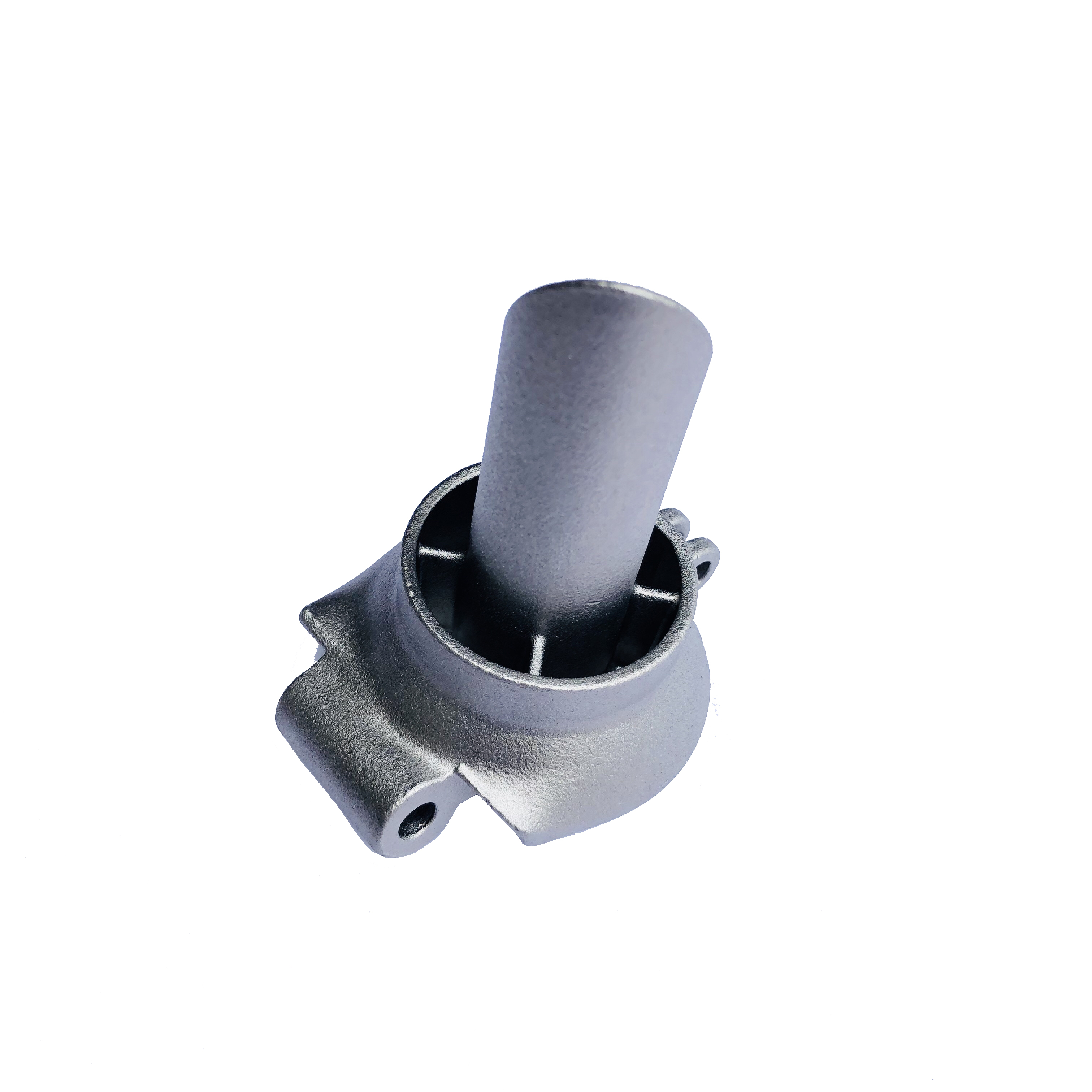
This carbon steel component integrates a tubular section, main housing, reinforcing ribs and mounting lugs into a single casting.
Silica sol investment casting allows these complex features to be produced close to the final shape while reducing the need for separate fabrication, welding and assembly.
Zeren provides integrated manufacturing from:
Drawing Review → Tooling → Investment Casting → Heat Treatment → CNC Machining → Inspection
Hollow tubular structures
Angled tube sections
Integrated mounting housings
Reinforcing ribs
Mounting lugs and holes
Curved structural transitions
Machined assembly interfaces
Custom automotive component geometry
All parts are manufactured according to customer drawings, 3D models and technical specifications.
Casting Process
Automotive components with complex tubular structures and integrated mounting features can be difficult to produce efficiently through machining or fabrication alone.
Silica sol investment casting allows several functional features to be combined into one near-net-shape component.
Tubular sections, ribs, mounting lugs and housing features can be integrated into a single casting, helping reduce welding and assembly operations.
Investment casting is suitable for curved surfaces, angled tubes, internal transitions and other three-dimensional structures.
Most of the component geometry can be formed during casting, reducing unnecessary material removal during secondary machining.
Wall thickness, tube angle, rib position, mounting features and interface geometry can be customized according to the customer's design.
Before tooling production, our engineering team can review:
Wall thickness
Tube geometry
Internal passages
Tube-to-housing transitions
Reinforcing rib thickness
Mounting lug geometry
Casting shrinkage
Machining allowance
Potential deformation
Datum and fixture selection
Early manufacturability review helps improve casting stability and reduce unnecessary tooling modifications.
Material & Machining
This automotive component is manufactured from carbon steel using silica sol investment casting.
Carbon steel is commonly used for structural and mechanical components requiring a suitable combination of:
Strength
Toughness
Machinability
Mechanical performance
Cost efficiency
Heat treatment can also be applied according to the specified material grade and mechanical property requirements.
In addition to carbon steel, Zeren manufactures custom investment cast components in:
Stainless steel
Alloy steel
Duplex stainless steel
Heat-resistant steel
Wear-resistant steel
The final material grade is selected according to the customer's drawing and application requirements.
Investment casting produces the complex overall component shape, while CNC machining can be used for critical functional areas requiring tighter tolerances.
Typical machined features include:
Mounting holes
Bores
Datum surfaces
Positioning features
Assembly interfaces
Threads
Connection surfaces
Critical diameters
Combining investment casting and CNC machining allows complex automotive components to be manufactured efficiently while maintaining dimensional control at important assembly locations.
Quality Control
For automotive components with tubular sections and integrated mounting structures, both casting quality and dimensional consistency are important.
Our quality control can include:
Chemical composition can be checked by spectrometer according to the specified carbon steel grade.
Inspection methods can include:
Vernier calipers
Height gauges
Bore gauges
CMM
3D scanning
Custom inspection fixtures
Key areas are checked for visible casting defects and manufacturing consistency, including:
Tube walls
Rib areas
Structural transitions
Mounting lugs
Internal openings
External cast surfaces
Critical holes, bores, datum surfaces and mounting features are checked against the approved drawing.
Finished components are inspected before packing for dimensions, surface condition and overall conformity.
Material certificates and dimensional inspection reports can be provided according to project requirements.
Applications
Investment casting is suitable for automotive parts that combine complex geometry, structural features and precision mounting interfaces.
Typical applications include:
Automotive mounting housings
Engine-related components
Automotive brackets and supports
Tubular connection components
Exhaust system components
Powertrain-related components
Chassis and structural components
Other custom automotive cast parts
Each component is manufactured according to the customer's:
Drawing + Material Specification + Dimensional Requirements + Application Requirements
Zeren supports custom automotive casting projects from initial engineering review through finished component production.
Casting feasibility, wall thickness, machining allowance and critical dimensions are reviewed before tooling.
Suitable for complex tubular structures, mounting lugs, reinforcing ribs and integrated geometries.
Heat treatment can be arranged according to the carbon steel grade and required mechanical properties.
Critical mounting and assembly features can be machined after casting.
Material, dimensions and finished-part quality can be verified according to customer requirements.
Yes. We manufacture custom automotive components according to customer 2D drawings, 3D models, material specifications and technical requirements.
Investment casting can integrate tubular sections, ribs, mounting lugs and complex transitions into a single casting, reducing separate fabrication and welding operations.
Yes. Carbon steel is widely used for investment cast structural and mechanical components requiring strength, toughness and good machinability.
Yes. Mounting holes, bores, datum surfaces, threads and other critical features can be CNC machined after casting.
Yes. Suitable heat treatment can be arranged according to the carbon steel grade and required mechanical properties.
Yes. We can review wall thickness, transitions, machining allowance, mounting structures and other manufacturability considerations before tooling production.
Send us your 2D drawing, 3D model, material specification and estimated quantity.
Our engineering team can review the casting structure, material requirements, machining features and inspection plan before quotation.